What Is Contemporary Art Definition? Unpacking Modern Meaning
Explore the dynamic, evolving world of contemporary art and discover its multifaceted definitions and profound cultural impact.
Explore Contemporary ArtKey Takeaways
- ✓ Contemporary art generally refers to art produced from the 1960s or 1970s to the present day.
- ✓ It is characterized by its diversity, often challenging traditional notions of art, medium, and aesthetic.
- ✓ Contemporary art frequently engages with social, political, and cultural issues, acting as a mirror or critique of its time.
- ✓ There is no single, universally accepted definition; its meaning is fluid and context-dependent.
How It Works
Approach contemporary art without preconceived notions. Its diverse forms and concepts often defy traditional classifications.
Understand that the artist's intention and the cultural context are crucial. Contemporary art often seeks to provoke thought or comment on current events.
Allow yourself to feel, question, and react to the artwork. It's less about passive viewing and more about active participation and interpretation.
Dive deeper into the artist, movement, or themes. Understanding the background can unlock new layers of meaning and appreciation.
Defining Contemporary Art: Beyond the Chronological Boundary
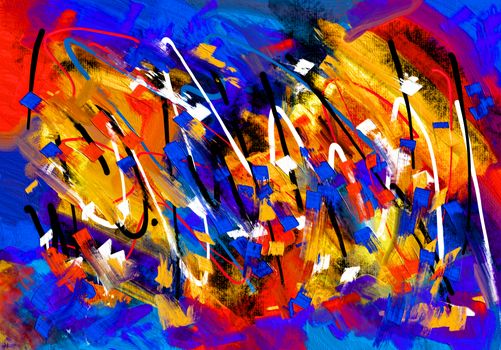 Photo: Steve A Johnson / Pexels
Historically, art movements like Impressionism or Cubism were defined by shared aesthetic principles or techniques. Contemporary art, however, is marked by a radical pluralism. There isn't one dominant style or medium; instead, we see an explosion of diverse practices, from painting and sculpture to video art, performance art, installation art, digital art, bio-art, and socially engaged practices. This diversity is a direct reflection of the complex, interconnected world we inhabit. Artists today draw inspiration from global events, technological advancements, scientific discoveries, philosophical debates, and a myriad of cultural influences. They are not confined by traditional artistic hierarchies, often blurring the lines between disciplines and incorporating elements from everyday life, science, and technology into their work.
One of the most significant aspects of contemporary art is its conceptual underpinning. While aesthetics and craftsmanship remain important for many artists, the idea or concept behind the artwork often takes precedence. This shift means that understanding contemporary art frequently requires more than just visual appreciation; it demands intellectual engagement. Viewers are invited, and often provoked, to think critically about the artist's intentions, the issues being addressed, and their own reactions. This emphasis on concept over purely aesthetic beauty can sometimes be challenging for those accustomed to more traditional forms of art, leading to questions like, "Is this really art?" But it is precisely this questioning that contemporary art often aims to elicit.
Furthermore, contemporary art is deeply intertwined with its social, political, and cultural context. Artists frequently use their work as a platform to comment on pressing global issues such as climate change, identity politics, globalization, human rights, and technological ethics. It can serve as a powerful tool for social critique, a means of fostering dialogue, or a way to give voice to marginalized communities. This engagement with the world makes contemporary art not just an aesthetic pursuit but a vital part of ongoing cultural conversations. It challenges us to look beyond the surface, to question our assumptions, and to consider different perspectives. For a deeper dive into the broader artistic landscape, explore the history of art. Understanding its evolution helps contextualize contemporary practices. This fluid, challenging, and ever-evolving nature is what makes defining contemporary art such an intriguing and often elusive endeavor, yet it is also what gives it its immense power and relevance in our modern world.
Characteristics and Key Themes in Contemporary Art
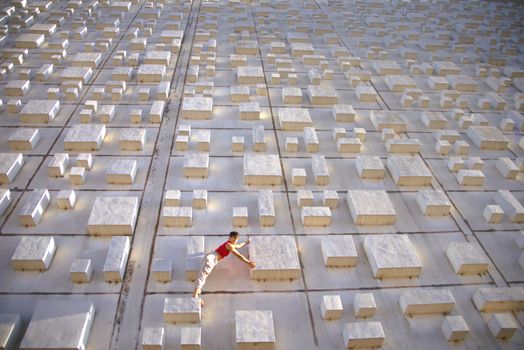 Photo: GuiGo Lopes / Pexels
Another defining feature is the frequent use of non-traditional materials and media. Gone are the days when art was primarily confined to oil on canvas or marble. Contemporary artists embrace everything from recycled waste, found objects, and industrial materials to digital code, biological matter, and even light itself. This expansion of materials allows for greater freedom of expression and often carries symbolic weight, commenting on consumerism, environmental issues, or the nature of existence itself. The choice of material is often as integral to the artwork's meaning as its form or subject matter.
Key themes that consistently appear in contemporary art reflect the complexities of the present era. Identity, in its myriad forms – personal, national, gender, racial, and sexual – is a pervasive subject. Artists explore how identities are constructed, performed, and challenged within society. Globalization is another significant theme, with artists often examining the impacts of interconnectedness, migration, and cultural exchange, sometimes celebrating diversity and other times critiquing homogenization or colonial legacies. Technology, both as a tool and a subject, plays a crucial role. From digital art and virtual reality experiences to critiques of surveillance and artificial intelligence, contemporary art grapples with the profound ways technology reshapes human experience and perception.
Environmental concerns are also at the forefront, with many artists using their practice to highlight climate change, ecological degradation, and humanity's relationship with nature. Their works can be educational, activist, or simply meditative, prompting reflection on our shared planet. The human body, too, remains a powerful site of artistic exploration, often used to question beauty standards, explore vulnerability, or comment on power structures. Performance art, in particular, utilizes the artist's own body as a primary medium to create ephemeral, often confrontational, experiences.
Finally, contemporary art is characterized by its engagement with the viewer. It often seeks to activate the audience, transforming them from passive observers into active participants or co-creators of meaning. This can be achieved through interactive installations, participatory performances, or works that require the viewer's interpretation to complete their narrative. This shift from an object-centric to an experience-centric approach underscores the dynamic and relational nature of much contemporary art, inviting a more profound and personal connection with the work. These characteristics collectively illustrate that contemporary art is not just a style, but an approach – a continuous, critical examination of the world we live in, expressed through an ever-expanding vocabulary of forms and ideas.
The Evolution and Impact of Contemporary Art Movements
 Photo: SHOX ART / Pexels
Following Pop Art, Minimalism and Conceptual Art further pushed the boundaries. Minimalism stripped art down to its most fundamental elements, focusing on geometric forms, industrial materials, and the viewer's experience of space. Conceptual Art, perhaps the most radical shift, prioritized the idea or concept over the physical object. For conceptual artists, the artwork could exist solely as a thought, a text, or an instruction, dramatically expanding what could be considered art. These movements laid the groundwork for the intellectual rigor and diverse practices seen today, emphasizing that art could be about ideas, not just visual representation.
The late 20th and early 21st centuries saw the rise of Postmodernism, a broad philosophical and artistic movement that questioned grand narratives, universal truths, and established hierarchies. Postmodern art often employed pastiche, irony, and appropriation, deconstructing existing art historical styles and cultural icons. It celebrated pluralism and challenged the notion of a single, authoritative artistic voice. This era led to a further fragmentation of styles and a greater emphasis on individual artistic expression, often rooted in identity politics and cultural critique.
The impact of contemporary art is profound and far-reaching. It has democratized the art world, making it more inclusive of diverse voices and perspectives from around the globe. Art institutions, once bastions of Western European traditions, now actively seek to represent a broader spectrum of global contemporary practices. This global perspective has enriched the artistic dialogue, introducing new forms, philosophies, and narratives. Contemporary art also plays a vital role in social commentary and activism. Artists address pressing issues, sparking conversations and sometimes even influencing public policy or social change. Their work can highlight injustices, challenge stereotypes, or offer alternative visions for the future.
Furthermore, contemporary art has expanded beyond traditional gallery and museum spaces, occupying public spaces, digital platforms, and even scientific laboratories. This integration into various facets of life underscores its relevance and accessibility. While it can sometimes be perceived as inaccessible or confusing, its continuous evolution reflects the dynamic nature of human creativity and society itself. It challenges us to think differently, to question the status quo, and to engage with the world in new and meaningful ways. For those interested in how art intersects with broader societal trends, understanding the role of art in society offers additional context. The ongoing dialogue between artist, artwork, and audience ensures that contemporary art remains a vibrant and essential force in shaping our cultural landscape.
Navigating the World of Contemporary Art: Tips for Appreciation
 Photo: Nadin Sh / Pexels
- Release Expectations: Don't expect contemporary art to always be beautiful in a conventional sense or to tell a straightforward story. Its purpose is often to provoke, question, or comment rather than simply to please the eye.
- Read the Wall Text: This is perhaps the most crucial tip. Museum and gallery wall texts provide vital context about the artist's intentions, the materials used, and the themes explored. They act as a guide, offering entry points into complex works.
- Observe, Then Question: Before reading anything, spend a few moments simply looking at the artwork. What do you see? How does it make you feel? What questions come to mind? Then, read the text and see how your initial observations align or diverge.
- Consider the Medium: The choice of material or medium is often significant. Why did the artist choose video over painting, or discarded objects over traditional sculpture? This choice can be integral to the artwork's message.
- Think About Context: What was happening in the world when the art was created? What social, political, or cultural issues might the artist be responding to? Contemporary art is deeply rooted in its time.
- Embrace Discomfort: Some contemporary art is designed to challenge, confront, or even disturb. It's okay to feel uncomfortable or confused; these reactions can be part of the intended experience and can lead to deeper understanding.
- Don't Be Afraid to Dislike It: Not every piece will resonate with you, and that's perfectly fine. Art is subjective. The goal is to engage, not necessarily to love every single piece.
- Engage in Dialogue: Discuss the art with friends, fellow viewers, or even gallery staff. Hearing different perspectives can illuminate aspects you might have missed.
- Visit Diverse Venues: Explore not just major museums but also smaller galleries, artist-run spaces, and public art installations. This will expose you to a wider range of practices and emerging artists.
- Research Artists and Movements: If a particular artist or theme captures your interest, delve deeper. Online resources, books, and documentaries can provide invaluable insights.
By adopting these strategies, you can transform your experience of contemporary art from potentially intimidating to incredibly enriching, opening up new avenues of thought and appreciation.
Comparison
| Feature | Contemporary Art | Modern Art | Traditional Art |
|---|---|---|---|
| Time Period | 1960s/70s - Present | 1860s - 1960s | Pre-1860s |
| Defining Principle | Conceptual, Pluralistic, Contextual | Innovation, Breaking Tradition | Aesthetic Beauty, Skill, Representation |
| Typical Mediums | Mixed Media, Digital, Performance, Installation, Painting, Sculpture | Oil Painting, Sculpture, Photography, Collage | Oil Painting, Fresco, Sculpture (Bronze, Marble) |
| Key Focus | Societal issues, Identity, Technology, Environment, Viewer Experience | Formal experimentation, Subjective experience, Abstraction | Religious themes, Portraiture, Landscape, Mythology |
| Viewer Engagement | Active interpretation, Participation | Visual and emotional response, Intellectual engagement | Aesthetic appreciation, Narrative understanding |
| Key Movements | Conceptual Art, Postmodernism, Bio-Art | Impressionism, Cubism, Surrealism, Abstract Expressionism | Renaissance, Baroque, Romanticism, Neoclassicism |
What Readers Say
"This article completely demystified what is contemporary art definition for me. I used to feel intimidated, but now I understand it's about context and engagement, not just pretty pictures."
Sarah J. · Brooklyn, NY"The detailed breakdown of characteristics and themes was incredibly helpful. It clarified why artists choose certain mediums and how to approach challenging pieces."
Mark D. · Los Angeles, CA"Before reading this, I often walked through contemporary galleries feeling lost. Now, I actively seek out the wall texts and try to understand the 'why' behind the art, which has dramatically improved my appreciation."
Elena R. · Chicago, IL"While I still find some contemporary art challenging, this guide provided excellent strategies for engaging with it. The tips on releasing expectations really helped me shift my perspective."
Chris P. · Austin, TX"As someone who studies cultural trends, the section on the evolution and impact of contemporary art movements was particularly insightful. It connects the art to broader societal shifts brilliantly."
Dr. Anya Sharma · Boston, MAFrequently Asked Questions
What is the main difference between contemporary art and modern art?
The primary distinction is chronological. Modern art typically refers to art from the 1860s to the 1960s, characterized by a break from tradition and formal experimentation. Contemporary art, from the 1960s/70s to the present, is more pluralistic, conceptual, and often engages directly with current social and political issues, blurring boundaries between disciplines.
Why does contemporary art often seem confusing or 'not like art'?
Contemporary art often prioritizes concept and experience over traditional aesthetics or craftsmanship. It challenges viewers to think, question, and engage intellectually, rather than just admire beauty. This can be disorienting if one expects art to always be visually pleasing or easily understood.
How can I start appreciating contemporary art if I'm a beginner?
Start by visiting local galleries and museums, paying close attention to the accompanying wall texts and artist statements. Don't be afraid to ask questions, and try to understand the artist's intent and the context of the work. Approach it with an open mind, ready to engage with new ideas and forms.
Is contemporary art only for the wealthy or art experts?
Absolutely not. While some contemporary art sells for high prices, the experience and appreciation of it are accessible to everyone. Many museums offer free days, and public art installations are freely available. Understanding contemporary art requires curiosity, not a degree or a large bank account.
How does contemporary art respond to global issues like climate change or social justice?
Contemporary artists frequently use their work as a platform for social commentary and activism. They create pieces that highlight environmental degradation, advocate for human rights, critique political systems, and explore identity politics, aiming to raise awareness, provoke dialogue, and sometimes inspire action.
Who should engage with contemporary art?
Anyone interested in understanding the world we live in, exploring new perspectives, or challenging their own perceptions should engage with contemporary art. It's for curious minds, critical thinkers, and anyone who believes art can be a powerful mirror or catalyst for change in society.
Is there a 'right' way to interpret a contemporary artwork?
While artists often have specific intentions, contemporary art frequently invites multiple interpretations. There isn't always one 'right' answer. Your personal response, informed by the context and your own experiences, is a valid part of the artwork's meaning. The discussion and dialogue it generates are often as important as any singular interpretation.
What are some future trends expected in contemporary art?
Future trends in contemporary art are likely to include increased integration of AI and virtual/augmented reality, further exploration of bio-art and scientific themes, greater emphasis on participatory and socially engaged practices, and continued decentralization with artists from underrepresented regions gaining more global recognition. Sustainability and environmental consciousness will also remain central themes.
Embrace the dynamic world of contemporary art. Move beyond traditional definitions and discover how this vibrant, ever-evolving field reflects, critiques, and shapes our present and future. Start your journey of discovery today.