✓ Surrealism emerged from the Dada movement in the early 20th century.
✓ Its primary goal was to liberate the human imagination by tapping into the subconscious mind.
✓ André Breton, the movement's main theorist, published the 'Manifesto of Surrealism' in 1924.
✓ Key techniques included automatism, dream depiction, and juxtaposition of unrelated objects.
How It Works
1
Understand Its Genesis
Surrealism wasn't born in a vacuum; it evolved from the anti-establishment sentiments of Dada. Grasping this lineage is crucial to understanding its revolutionary spirit.
2
Explore the Subconscious
At its core, surrealism is an exploration of dreams, the unconscious, and irrational thought. It seeks to bypass logic to reveal deeper truths about the human psyche.
3
Identify Key Characteristics
Look for unexpected juxtapositions, dream-like landscapes, distorted figures, and symbolic imagery. These elements are hallmarks of surrealist expression.
4
Connect with Its Philosophies
Surrealism was more than an art style; it was a philosophical and political movement aiming to transform society. Its desire for liberation extends beyond the canvas.
The Genesis and Core Tenets of Surrealist Art
Photo: Kirandeep Singh Walia / Pexels
To truly grasp the meaning of surrealism in art, one must journey back to its origins in the early 20th century, a period of immense social, political, and psychological upheaval. Emerging formally in Paris in 1924 with André Breton's 'Manifesto of Surrealism,' the movement was not merely an aesthetic choice but a profound philosophical and revolutionary endeavor. It sought to liberate humanity from the oppressive constraints of reason, logic, and societal conventions that, its proponents argued, had led to the horrors of World War I. Surrealism was a direct descendant of Dadaism, sharing its anarchic spirit and rejection of bourgeois values, but it diverged by proposing a constructive path forward rather than purely destructive nihilism. Dada, with its absurd performances and anti-art statements, cleared the ground, allowing Surrealism to plant its seeds in the rich soil of the subconscious. Exploring the nuances of art movements helps contextualize this evolution.
At the heart of surrealism lies the concept of the 'superior reality' – a reality where the dream and waking states merge into an absolute reality, or 'surreality.' Breton, influenced heavily by Sigmund Freud's psychoanalytic theories, believed that the subconscious mind held a vast, untapped reservoir of creative potential and truth. He advocated for techniques that would bypass conscious control, allowing these hidden depths to surface. Automatism, a method of spontaneous drawing or writing without conscious thought, was one such technique, aiming to transcribe thoughts directly from the unconscious. This wasn't about depicting dreams realistically, but about accessing the dream-like state itself, extracting its raw, unfiltered imagery and emotions. The surrealists were fascinated by the bizarre, the irrational, and the uncanny, seeing these as pathways to deeper understanding. They believed that by uniting the conscious and unconscious realms, they could achieve a new, more comprehensive understanding of reality, fostering both individual and societal liberation. Their art, therefore, became a tool for psychological exploration and social critique, challenging viewers to look beyond the surface and question established norms. This deep dive into the psyche distinguished surrealism from many preceding art movements, positioning it as a radical force for change and introspection. The movement's influence rapidly spread across various artistic disciplines, from painting and sculpture to literature and film, demonstrating its universal appeal and profound resonance with the human condition.
Key Characteristics and Artistic Manifestations
Photo: Tima Miroshnichenko / Pexels
The meaning of surrealism in art is perhaps best understood through its distinctive visual and conceptual characteristics. Surrealist artworks are often immediately recognizable by their startling and illogical juxtapositions. Artists like Salvador Dalí, with his melting clocks in 'The Persistence of Memory,' and René Magritte, with his iconic pipe declaring 'Ceci n'est pas une pipe' ('This is not a pipe'), masterfully employed this technique. These artists didn't just paint strange scenes; they painted familiar objects in unfamiliar contexts, thereby challenging our perception of reality and encouraging us to question the nature of existence. The uncanny, a Freudian concept referring to something simultaneously familiar and alien, permeated much of surrealist output, creating a sense of disquiet and wonder.
Another defining characteristic is the exploration of dream imagery and symbolism. Many surrealist paintings resemble vivid, often disturbing, dreams, rich with personal and universal symbols. Max Ernst’s fantastical creatures and desolate landscapes, for instance, evoke a sense of primordial fear and subconscious narrative. The meticulous, almost photographic detail in some surrealist works, particularly those by Dalí and Magritte, paradoxically heightens the sense of unreality. By rendering impossible scenes with such precision, they force the viewer to confront the illogical as if it were fact, blurring the lines between what is real and what is imagined. This technique, known as veristic surrealism, contrasts with biomorphic surrealism, exemplified by artists like Joan Miró and Yves Tanguy, who favored more abstract, organic forms that seemed to emerge directly from the unconscious without specific representational links.
Surrealism also embraced chance and accident as creative forces. Techniques such as frottage (rubbing a pencil over a textured surface), grattage (scraping paint off a canvas), and decalcomania (transferring paint from one surface to another) were used to generate unexpected patterns and textures, which artists would then interpret and develop. These methods aligned with the surrealist goal of minimizing conscious control and allowing the subconscious to guide the artistic process. The diversity of approaches within the movement, from the precise dreamscapes to the abstract automatism, underscores the breadth of its inquiry into the human mind and its limitless capacity for imagination. It was a movement that championed individuality within a shared philosophical framework, allowing each artist to explore their unique subconscious landscape.
Impact and Legacy: How Surrealism Transformed Art and Culture
The meaning of surrealism in art extends far beyond the canvases and sculptures of its initial practitioners; its impact reverberates throughout modern and contemporary culture, fundamentally altering our understanding of creativity, reality, and the human psyche. Surrealism was not just an art movement; it was a way of thinking, a philosophical stance that championed freedom of expression, challenged societal norms, and advocated for a liberation of the mind. Its influence can be seen across various disciplines, demonstrating its pervasive and enduring power. In literature, writers like André Breton himself, Paul Éluard, and Louis Aragon explored automatic writing and dream narratives, pushing the boundaries of poetic and prose forms. The disjointed, dream-like quality of many surrealist texts continues to inspire experimental writing today. Understanding artistic movements' legacies is crucial for appreciating their long-term value.
Cinema, too, was profoundly shaped by surrealist ideals. Luis Buñuel and Salvador Dalí's 'Un Chien Andalou' (An Andalusian Dog) remains a seminal work, famous for its shocking and illogical imagery that directly aimed to disrupt conventional narrative. This film, along with others like Jean Cocteau's 'Blood of a Poet,' paved the way for experimental cinema and influenced countless filmmakers who sought to convey psychological states and non-linear narratives. From the unsettling atmospheres of David Lynch to the fantastical worlds of Michel Gondry, surrealist principles continue to inform cinematic language. Fashion design also embraced surrealism, with Elsa Schiaparelli famously collaborating with Dalí on iconic garments like the 'Lobster Dress' and the 'Shoe Hat,' transforming everyday objects into wearable art and challenging traditional notions of beauty and utility. This fusion of art and fashion highlighted surrealism's ability to permeate popular culture.
Beyond the arts, surrealism's emphasis on the unconscious and irrational contributed to a broader cultural shift. It encouraged a questioning of authority, a skepticism towards pure logic, and an appreciation for the hidden depths of human experience. This philosophical underpinning resonated with revolutionary political movements, although the surrealists themselves had a complex and often tumultuous relationship with communism and other political ideologies. Its legacy is evident in advertising, where illogical juxtapositions and dream-like scenarios are frequently used to capture attention and create memorable campaigns. Moreover, the very idea of 'surreal' has entered common parlance, used to describe anything bizarre, dreamlike, or utterly improbable. This linguistic integration testifies to the movement's profound and lasting impression on our collective consciousness, reminding us that reality is often stranger, and more interesting, than fiction.
Navigating the Nuances: Common Misconceptions and Deeper Meanings
While the term 'surreal' is often used colloquially to describe anything strange or bizarre, understanding the true meaning of surrealism in art requires distinguishing it from mere oddity. A common misconception is that surrealism is simply about painting dreams or creating nonsensical imagery. While dreams and irrationality are central, the movement was far more deliberate and philosophical than just whimsical fantasy. Surrealist artists weren't just randomly assembling bizarre elements; they were engaging in a conscious effort to tap into the unconscious, often with specific psychological or political intentions. Their works were meant to provoke thought, challenge perception, and ultimately, liberate the mind from rational constraints, not merely entertain with strange visuals.
Another nuance lies in the distinction between surrealism and fantasy art. While both may feature fantastical elements, surrealism is typically grounded in the psychological exploration of the subconscious mind and its relationship to reality, often with an underlying critical or revolutionary agenda. Fantasy art, conversely, often focuses on world-building, mythological narratives, or escapism. Surrealism sought to reveal a 'superior reality' within the existing world, not to transport viewers to an entirely different one. For example, while a dragon might appear in both, a surrealist dragon would likely symbolize a deep-seated fear or desire, emerging from a dream logic, rather than being part of a pre-established mythical lore.
Furthermore, the political dimension of surrealism is often overlooked. Many surrealists were actively involved in political activism, viewing their artistic endeavors as integral to a broader revolutionary project. They believed that by transforming the inner world, they could contribute to transforming the outer world. This commitment to social change adds another layer of depth to their works, suggesting that the bizarre imagery often carried subversive messages. The movement's internal conflicts and eventual splintering were often tied to these political disagreements, highlighting that it was a living, evolving philosophy as much as an art style. Recognizing these deeper layers helps to move beyond a superficial appreciation of surrealist aesthetics to a more profound understanding of its revolutionary spirit and enduring relevance.
Here are some common pitfalls to avoid when interpreting surrealist art:
* **Mistaking randomness for automatism:** Automatism is a technique to access the subconscious, not an excuse for arbitrary marks.
* **Ignoring the historical context:** Surrealism emerged from specific socio-political conditions; understanding these enriches interpretation.
* **Reducing it to dream illustration:** While dreams are important, surrealism aims for a 'surreality' that integrates dream and waking life.
* **Overlooking the philosophical underpinnings:** The movement was driven by specific theories from Freud, Marx, and others.
* **Separating the art from the artist's intent:** Many surrealist works carry personal or collective symbolic weight intended by the creator.
Comparison
Feature
Surrealism
Dadaism
Cubism
Primary Goal
Liberate subconscious, superior reality
Destroy traditional art, anti-establishment
Deconstruct reality, multiple perspectives
Key Influence
Freud's psychoanalysis
WWI, societal disillusionment
African art, Cézanne
Aesthetic Focus
Dream-like, illogical juxtapositions
Absurd, chaotic, anti-art
Geometric forms, fragmented views
Political Stance
Revolutionary, anti-bourgeois
Anarchic, nihilistic
Less overtly political
Prominent Artists
Dalí, Magritte, Miró
Duchamp, Hausmann, Arp
Picasso, Braque
What Readers Say
★★★★★
"This article completely transformed my understanding of the meaning of surrealism in art. I always thought it was just 'weird art,' but now I see the profound psychological depth and philosophical intent behind it. Truly eye-opening!"
Eleanor Vance · Brooklyn, NY
★★★★★
"As an art student, I found the breakdown of surrealism's genesis and its connection to Dadaism incredibly helpful. The detailed explanations of automatism and juxtaposition clarified so much for me."
Marcus Chen · Los Angeles, CA
★★★★★
"I used to struggle with interpreting Salvador Dalí's work, but after reading this, I now feel I have the tools to appreciate the deeper meaning of surrealism in art. My next gallery visit will be much more enriching."
Sophia Rodriguez · Austin, TX
★★★★★
"The article is exceptionally comprehensive, though I would have loved even more examples of specific artworks alongside the descriptions of characteristics. Still, a fantastic resource for anyone wanting to understand surrealism."
David Kim · Chicago, IL
★★★★★
"Beyond just art, this piece helped me understand how surrealism influenced literature and film. It's fascinating to see how such a specific artistic movement had such a broad cultural ripple effect."
Priya Sharma · Seattle, WA
Frequently Asked Questions
What is the fundamental meaning of surrealism in art?
The fundamental meaning of surrealism in art is to liberate human imagination and consciousness by tapping into the subconscious mind, dreams, and irrationality. It seeks to create a 'superior reality' (surreality) where the dream and waking states merge, challenging conventional logic and societal norms to reveal deeper truths about existence.
Is surrealism just about painting dreams?
No, surrealism is not merely about illustrating dreams. While dreams are a significant source of inspiration and imagery, the movement's goal was to access the dream-like state itself and the unconscious processes, often through techniques like automatism, to uncover a 'surreality' that integrates these elements with waking life, rather than just depicting a literal dream narrative.
How did André Breton influence the meaning of surrealism?
André Breton was the primary theorist and leader of the Surrealist movement. His 'Manifesto of Surrealism' (1924) formally defined its principles, emphasizing the liberation of the subconscious, the importance of dreams, and the use of automatism. His writings and leadership were instrumental in shaping the philosophical and artistic direction of surrealism.
What was the political stance of surrealism?
Surrealism had a strong revolutionary and anti-bourgeois political stance. Many surrealists were aligned with communist ideals, believing that art could be a tool for social and political transformation. They aimed to dismantle oppressive societal structures by challenging conventional thought and advocating for individual and collective liberation, though their political affiliations were often complex and fraught with internal conflicts.
How does surrealism differ from Dadaism?
While surrealism emerged from Dadaism, it differed significantly. Dadaism was largely nihilistic and destructive, aiming to dismantle traditional art and societal values through absurdity. Surrealism, while sharing Dada's anti-establishment spirit, sought a more constructive path, aiming to build a 'superior reality' by exploring the subconscious and uniting the dream and waking worlds, offering a vision for a liberated future.
Who should engage with the meaning of surrealism in art?
Anyone interested in understanding the depths of human creativity, psychology, and societal critique should engage with the meaning of surrealism in art. It's particularly enriching for art enthusiasts, students of art history, psychologists, philosophers, and individuals who appreciate art that challenges perceptions and provokes profound thought.
Are there any risks in misinterpreting surrealist art?
The primary risk in misinterpreting surrealist art is reducing it to mere 'weirdness' or randomness, thereby missing its profound psychological, philosophical, and often political intentions. Overlooking its deliberate techniques, historical context, and the artists' conscious efforts to tap into the unconscious can lead to a superficial understanding of a deeply complex and revolutionary movement.
What is the future trend for understanding surrealism in a digital age?
In the digital age, understanding surrealism is evolving. Its principles of juxtaposing disparate elements and exploring dream logic resonate strongly with digital art, AI-generated imagery, and virtual reality experiences. The future trend will likely involve new interpretations of automatism through algorithms, digital dreamscapes, and interactive installations that allow viewers to immerse themselves in 'surreality,' further blurring the lines between the conscious and digital unconscious.
Unlock the full meaning of surrealism in art and allow its revolutionary spirit to transform your perspective. Explore further, question deeper, and embrace the boundless possibilities of the human imagination.
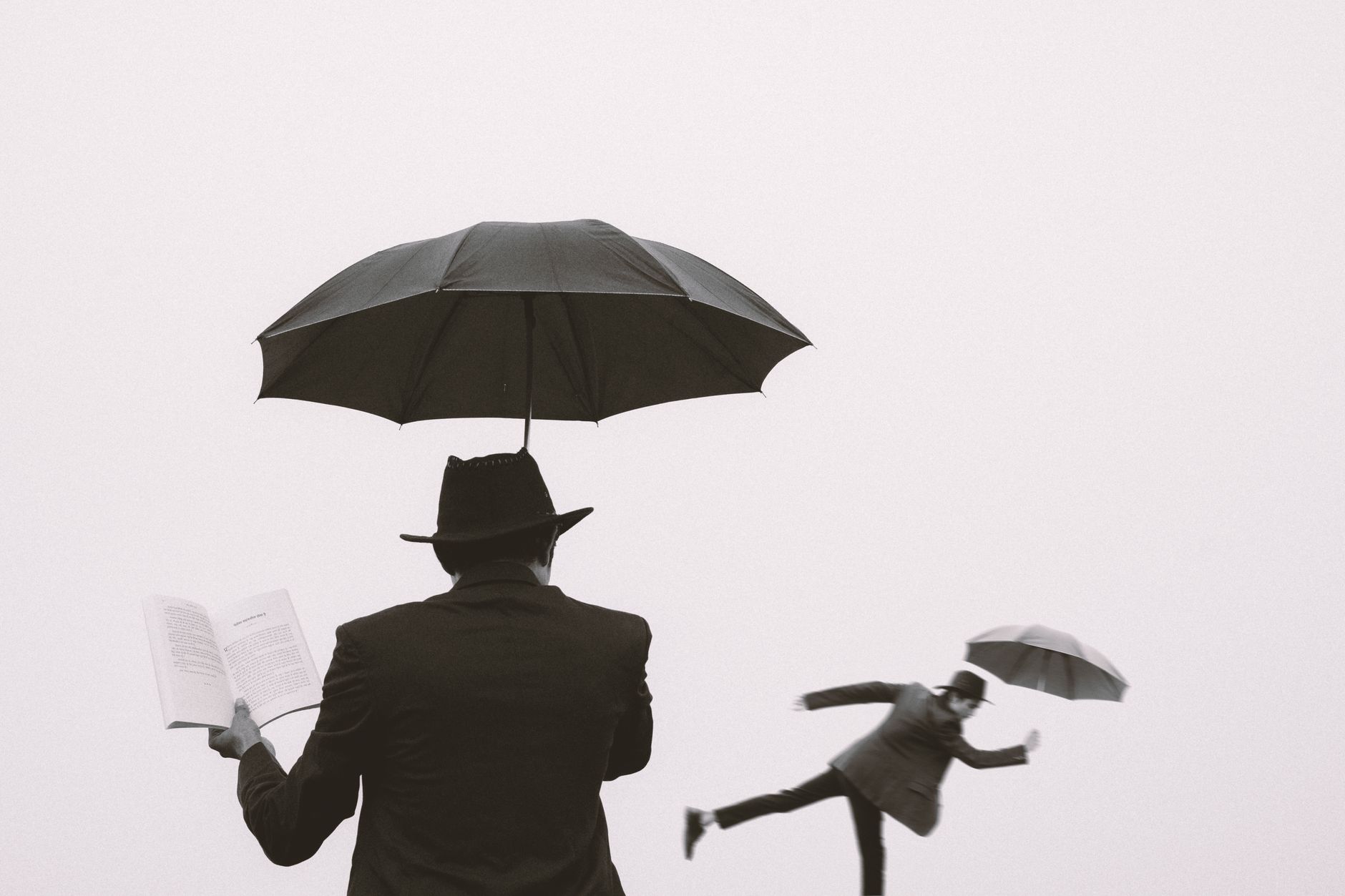
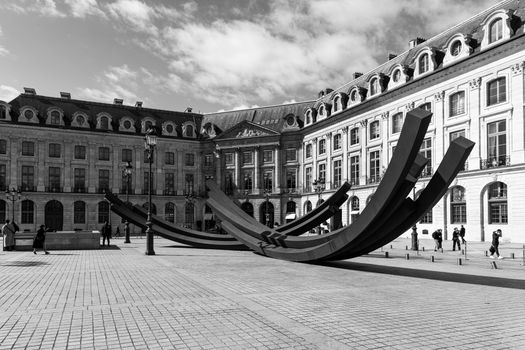 Photo: Kirandeep Singh Walia / Pexels
 Photo: Tima Miroshnichenko / Pexels