Unveiling Famous American Artists 20th Century Masterpieces
June 22, 2026 15 min read 2,916 words
Dive into the vibrant world of American art and discover the visionaries who shaped a century of creativity.
Explore Their Legacy
The Dawn of American Modernism: Early 20th Century Innovators
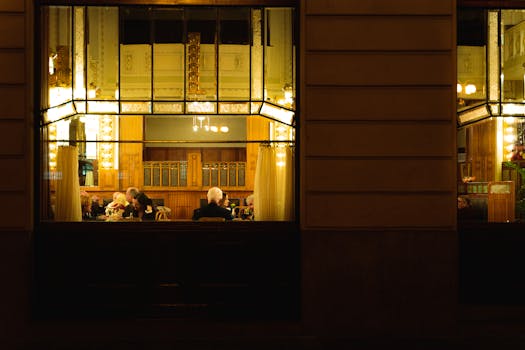 Photo: Paul Lichtblau / Pexels
The turn of the 20th century marked a pivotal moment for American art, as artists began to shed the long shadow of European influence and forge a uniquely American aesthetic. This period, often characterized by a dynamic interplay of tradition and rebellion, saw the emergence of figures who would redefine artistic expression. One of the earliest and most influential groups was the Ashcan School, a collective of New York City-based artists who championed gritty, realistic portrayals of urban life. Led by Robert Henri, artists like George Bellows and John Sloan captured the bustling energy of tenements, street scenes, and working-class existence with an unvarnished authenticity that shocked many, yet resonated deeply with a changing nation. Their work laid foundational groundwork for later American realists, emphasizing the importance of direct observation and social commentary. Simultaneously, artists like Marsden Hartley and Arthur Dove were experimenting with abstraction, influenced by European modernism but infusing their work with a distinctly American spirit. Hartley, in particular, explored themes of identity, landscape, and spirituality through bold colors and simplified forms, often drawing inspiration from his native Maine. Dove, considered one of the first American abstract painters, developed a unique style inspired by nature, translating organic forms into vibrant, rhythmic compositions.
Perhaps no artist better embodies the bridge between early 20th-century realism and a burgeoning American modernism than Edward Hopper. His iconic paintings, such as 'Nighthawks' and 'Gas', masterfully evoke a sense of quiet solitude, introspection, and the psychological landscape of modern American life. Hopper's meticulous attention to light and shadow, combined with his poignant portrayal of isolated figures within vast urban or rural settings, created a powerful visual language that continues to captivate audiences. His work is a profound meditation on the human condition in an increasingly industrialized and anonymous world. Another towering figure from this era is Georgia O'Keeffe, whose groundbreaking interpretations of natural forms, particularly flowers and New Mexico landscapes, transformed the way viewers perceived the world. Her close-up, sensuous depictions of flowers, often magnified to monumental scale, challenged conventional notions of beauty and abstraction. O'Keeffe's deep connection to the American Southwest profoundly influenced her later work, where she captured the stark beauty of the desert with an almost spiritual intensity. Her distinctive style, characterized by smooth lines, vibrant colors, and a keen sense of composition, established her as a pioneer of American modernism and a powerful female voice in a male-dominated art world. This period was not just about individual brilliance; it was about the collective striving for an artistic identity that truly reflected the complexity and diversity of the American experience. The innovations of these early 20th-century artists set the stage for the explosive creativity that would define the rest of the century, paving the way for future movements and
groundbreaking artistic expressions. Their willingness to break from tradition and embrace new forms of expression solidified their place as true pioneers.
The Abstract Revolution: Post-War American Art
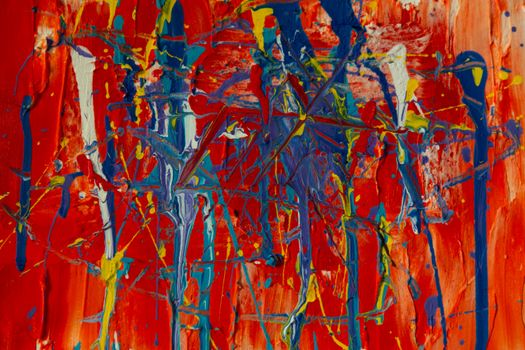 Photo: Steve A Johnson / Pexels
Following the tumultuous years of World War II, American art underwent a radical transformation, giving rise to one of its most globally influential movements: Abstract Expressionism. Centered in New York City, this movement shifted the epicenter of the art world from Paris to America, establishing a new, distinctly American avant-garde. Abstract Expressionism was characterized by large-scale, non-representational paintings that emphasized spontaneous, energetic brushwork and the artist's emotional and psychological state. The movement comprised two main tendencies: Action Painting and Color Field Painting. Jackson Pollock, arguably the most iconic figure of Action Painting, revolutionized artistic technique with his 'drip' method. Instead of painting on an easel, Pollock would lay large canvases on the floor and pour, drip, and splash paint onto them, creating intricate, all-over compositions that conveyed raw energy and motion. His work was a direct, visceral expression of the unconscious, a radical departure from traditional artistic practices, and his process itself became a significant part of the art. Willem de Kooning, another central figure, maintained a more gestural, albeit abstract, approach, often incorporating elements of the human figure into his powerful and dynamic compositions, such as his famous 'Woman' series. His work explored the complexities of human emotion and form through vigorous brushstrokes and vibrant, often jarring, color palettes.
In contrast to the frenetic energy of Action Painting, Color Field painters like Mark Rothko and Barnett Newman explored the emotional power of color through large, expansive fields of unbroken hue. Rothko's iconic canvases feature soft, rectangular blocks of color that seem to float and pulsate, inviting deep contemplation and a nearly spiritual experience. His aim was to evoke profound human emotions through simplified forms and saturated colors, creating immersive environments that transcended mere visual aesthetics. Newman, with his characteristic 'zips' – thin vertical lines dividing large color fields – sought to achieve the sublime, creating works that were both monumental and deeply personal. These artists believed that art could communicate universal truths and profound human experiences without recourse to narrative or recognizable imagery. Their work was a powerful assertion of artistic freedom and individualism, reflecting a post-war desire to break free from past constraints and explore new dimensions of human consciousness.
The impact of Abstract Expressionism extended far beyond painting, influencing sculpture, dance, and even music. It solidified New York as the new global capital of art and inspired subsequent generations of artists to push the boundaries of creative expression. The movement's emphasis on individuality, emotional intensity, and the act of creation itself left an indelible mark on art history, proving that American artists could not only participate in global art dialogues but lead them. The bold, often challenging, works of these artists continue to provoke thought and emotion, reminding us of the profound power of abstract art to communicate complex ideas and feelings. This period of intense creativity and innovation fundamentally reshaped the trajectory of
modern art worldwide, making the American contribution undeniable.
Pop Art and Beyond: Challenging Conventions in Late 20th Century
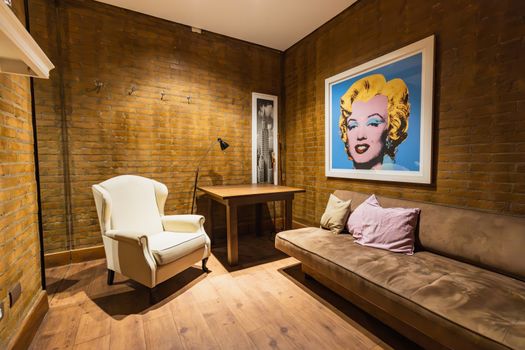 Photo: Matheus Bertelli / Pexels
As the mid-20th century progressed, a new wave of artists emerged, directly challenging the introspective seriousness of Abstract Expressionism. This shift gave rise to Pop Art, a movement that embraced popular culture, mass media, and consumerism as its subject matter. Pop artists blurred the lines between high art and everyday life, often using recognizable imagery from advertising, comic books, and common objects. Andy Warhol, perhaps the most recognizable figure of Pop Art, became synonymous with the movement through his iconic silk-screen prints of celebrity portraits, soup cans, and commercial products. Warhol's work questioned notions of originality, authorship, and the commodification of art itself. His factory-produced art and his famous declaration that 'everyone will be world-famous for 15 minutes' captured the ephemeral nature of celebrity and mass culture. His detached, almost mechanical approach to art-making was a stark contrast to the emotional intensity of his predecessors, yet it was equally revolutionary in its own right. Roy Lichtenstein, another prominent Pop artist, drew inspiration directly from comic strips, meticulously recreating their aesthetic with bold outlines, Ben-Day dots, and speech bubbles. His large-scale paintings, such as 'Whaam!' and 'Drowning Girl', elevated what was considered lowbrow culture into the realm of fine art, commenting on consumerism, heroism, and popular imagery with wit and irony.
Beyond Pop Art, the latter half of the 20th century witnessed a diverse array of artistic movements and individual expressions, each contributing to the rich tapestry of American art. Minimalism emerged as a reaction against the emotional excesses of Abstract Expressionism and the commercialism of Pop Art, focusing on geometric forms, industrial materials, and a reduction of art to its essential elements. Artists like Donald Judd and Dan Flavin created sculptures that emphasized purity of form and the relationship between the artwork and its environment, challenging traditional notions of artistic craft and representation. Conceptual Art, which prioritized ideas over aesthetics, also gained traction, with artists like Sol LeWitt creating instructions or 'ideas' for artworks, rather than physical objects themselves. This pushed the boundaries of what could be considered art, emphasizing intellectual engagement over visual pleasure.
Furthermore, the late 20th century saw a growing emphasis on identity politics and a diversification of artistic voices. Artists from marginalized communities began to gain greater recognition, using their art to explore themes of race, gender, sexuality, and social justice. Figures like Jean-Michel Basquiat, who emerged from the New York graffiti scene, combined street art aesthetics with powerful social commentary, addressing issues of race, class, and power through his raw and expressive paintings. His meteoric rise and tragic early death cemented his legacy as a powerful voice of his generation. Cindy Sherman challenged traditional representations of women in media through her self-portraits, where she transformed herself into various archetypal female figures, questioning identity and the male gaze. These artists, and many others, continued to push boundaries, ensuring that American art remained a vibrant and critical reflection of its time, continuously evolving and challenging its audience. The late 20th century solidified the pluralistic nature of American art, demonstrating that there was no single dominant style, but rather a rich multiplicity of voices and visions. Their work continues to provoke discussion and shape contemporary artistic discourse, proving the enduring power of art to both reflect and shape society.
The Enduring Impact: Why These Artists Still Matter Today
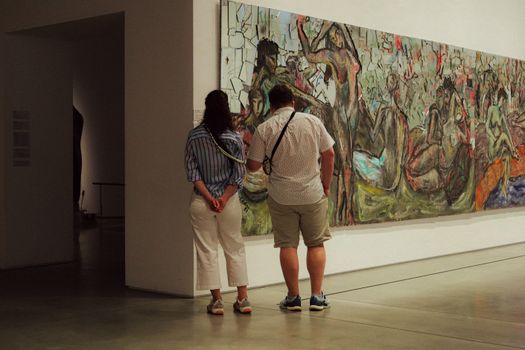 Photo: rana aldemir / Pexels
The legacy of famous American artists from the 20th century extends far beyond their individual masterpieces. Their collective contributions fundamentally reshaped the global art landscape, establishing America as a dominant force in contemporary art and profoundly influencing subsequent generations of artists worldwide. Understanding their impact is crucial for appreciating the trajectory of modern and postmodern art.
**Tips for Engaging with 20th-Century American Art:**
* **Visit Museums and Galleries:** Experience the scale and texture of these works firsthand. Many major museums across the US, like the Museum of Modern Art (MoMA) in New York or the Art Institute of Chicago, house extensive collections of 20th-century American art. Online virtual tours can also offer a great starting point.
* **Read Biographies and Art History Texts:** Delve into the lives and contexts of these artists. Understanding their personal struggles, inspirations, and the socio-political climate of their time can deepen your appreciation for their work. Books like 'American Art Since 1945' or biographies of individual artists offer invaluable insights.
* **Explore Documentaries and Interviews:** Many documentaries feature rare footage of artists at work or interviews with those who knew them. These can provide a more intimate understanding of their creative processes and personalities. The 'Art in the 21st Century' series often features discussions of their lasting impact.
* **Look for Interconnections:** Notice how different movements and artists influenced each other. For example, how did the Ashcan School's realism pave the way for Hopper's urban scenes? How did Abstract Expressionism's emotional intensity get reacted against by Pop Art's coolness? Recognizing these dialogues enriches your understanding.
* **Engage with the 'Why':** Don't just look at what the artists painted, but consider *why* they chose their subjects, techniques, and styles. What social, political, or personal messages were they trying to convey? What artistic conventions were they challenging or upholding?
* **Consider the Cultural Context:** The 20th century was a period of immense change in America – two World Wars, the Great Depression, the Civil Rights Movement, the Cold War, and the rise of mass media. These events profoundly shaped the artistic output of the era. Understanding this context helps to decode the deeper meanings within the art.
These artists didn't just create beautiful or shocking images; they challenged perceptions, provoked thought, and reflected the complex identity of a nation in constant flux. Their willingness to innovate, to break free from established norms, and to engage directly with the realities of their time ensures that their contributions remain relevant and inspiring for artists and audiences today. From the raw energy of Pollock's drips to the cool detachment of Warhol's silkscreens, the famous American artists of the 20th century crafted a legacy that continues to resonate, inviting us to look closer, think deeper, and experience the world anew.
