✓ Abstract Expressionism, born in post-WWII America, was the first major art movement to originate in the US.
✓ Jackson Pollock's 'drip painting' technique revolutionized the concept of artistic creation.
✓ Mark Rothko's color field paintings evoke profound emotional and spiritual responses.
✓ Helen Frankenthaler pioneered stain painting, blurring the lines between color and canvas.
How It Works
1
Understand the Context
Abstract art didn't emerge in a vacuum. It was a reaction to global events, societal shifts, and earlier art movements. Understanding this context helps appreciate its radical nature.
2
Explore Key Figures
Delve into the lives and works of pivotal artists. Each artist brought a unique philosophy and technique to the abstract movement, shaping its diverse forms and expressions.
3
Analyze Techniques & Styles
From action painting to color field, discover the various methods employed by these artists. Learn how their innovative approaches pushed artistic boundaries and redefined aesthetics.
4
Appreciate the Legacy
Recognize the enduring influence of these artists on contemporary art and culture. Their work continues to inspire, provoke, and challenge perceptions of what art can be.
The Dawn of Abstract Expressionism: A Post-War Revolution
Photo: Steve A Johnson / Pexels
The mid-20th century marked a pivotal shift in the global art world, as the epicenter of artistic innovation moved from Paris to New York. This era gave birth to Abstract Expressionism, a movement that not only redefined painting but also asserted America's burgeoning cultural dominance. Following the devastation of World War II, artists grappled with profound existential questions, seeking new forms of expression that could convey the depth of human emotion, trauma, and resilience. Traditional representational art felt inadequate to capture the complexities of a shattered world, paving the way for abstraction to take center stage.
Abstract Expressionism wasn't a monolithic style; rather, it encompassed a diverse range of approaches united by a common thread: an emphasis on spontaneous, intuitive, and often large-scale expression. Artists sought to convey inner psychological states directly onto the canvas, often bypassing conventional notions of composition and subject matter. This was art as an act, a direct engagement between the artist's psyche and the material. The movement fostered a sense of raw energy and emotional intensity, reflecting the turbulent times in which it emerged. It was a rebellion against academic strictures, a quest for artistic freedom that resonated deeply with the American spirit of individualism.
Key figures began to coalesce in New York City, particularly around the Cedar Tavern in Greenwich Village, forming a vibrant intellectual and artistic community. These artists, many of whom had been influenced by European Surrealism and its focus on the subconscious, pushed those ideas further into complete abstraction. They believed that art should be a direct conduit to the universal unconscious, a primal language that transcended cultural barriers. The sheer scale of many of their works was also a deliberate choice, intended to envelop the viewer, creating an immersive experience rather than a mere observation. This immersive quality was central to their desire to evoke strong emotional responses and forge a deeper connection with the audience.
Moreover, the rise of Abstract Expressionism was supported by influential critics like Clement Greenberg and Harold Rosenberg, who championed the movement and provided theoretical frameworks for understanding its significance. Greenberg, in particular, advocated for art's purity and its separation from external narratives, emphasizing the formal qualities of painting – color, line, and surface – as paramount. Rosenberg coined the term "action painting" to describe the dynamic, gestural approach of artists like Jackson Pollock, highlighting the performative aspect of their creative process. These critical endorsements helped to cement the movement's status and propel it onto the international stage, making American art a dominant force for decades to come. The initial shock and controversy surrounding these works eventually gave way to widespread recognition, cementing their place in art history. This period marked a true coming-of-age for American art, firmly establishing its unique voice and enduring legacy.
Pioneers of the Canvas: Jackson Pollock and Mark Rothko
Photo: Dan Cristian Pădureț / Pexels
Among the constellation of famous American abstract artists, Jackson Pollock and Mark Rothko stand out as titans whose innovations profoundly reshaped the trajectory of modern art. Each, in their distinct way, pushed the boundaries of painting, creating works that continue to captivate and challenge viewers worldwide.
Jackson Pollock (1912-1956) is arguably the most iconic figure of Abstract Expressionism, synonymous with his revolutionary "drip paintings." Rejecting the easel and traditional brushes, Pollock would lay his canvases on the floor, moving around them, dripping, pouring, and flinging industrial paints from cans onto the surface. This radical method, often referred to as "action painting," transformed the act of painting into a visceral, almost ritualistic performance. His works, such as *Lavender Mist* (1950) or *Autumn Rhythm (Number 30)* (1950), are dense tapestries of intertwined lines, splatters, and colors, creating an all-over composition without a focal point. For Pollock, the painting was not a picture but an event, a record of his physical and psychological engagement with the canvas. He famously stated, "When I am in my painting, I'm not aware of what I'm doing. It is only after a period of 'getting acquainted' that I see what I have been about." This approach allowed for a direct, unfiltered expression of his inner world, a raw energy that continues to resonate with audiences. His work was a profound departure from centuries of Western art tradition, emphasizing process over product and challenging preconceived notions of artistic skill and beauty. Pollock's influence was immense, opening up new avenues for artistic experimentation and forever altering the relationship between artist, canvas, and viewer. His life, marked by both artistic brilliance and personal struggles, further cemented his mythic status in the art world.
Mark Rothko (1903-1970), on the other hand, pursued a different path within abstraction, leading the way in what became known as Color Field painting. Unlike Pollock's frenetic energy, Rothko's work is characterized by large, luminous rectangular fields of color, softly blurred at their edges, floating on a monochromatic ground. His iconic paintings, such as those in the *Seagram Murals* series or *Orange and Yellow* (1956), are designed to be immersive, almost spiritual experiences. Rothko believed that color itself could convey profound emotions and universal truths, aiming to evoke a sense of tragedy, ecstasy, or doom. He famously said, "I'm interested only in expressing basic human emotions – tragedy, ecstasy, doom, and so on – and the fact that a lot of people break down and cry when confronted with my pictures shows that I communicate those basic human emotions." His canvases are often immense, intended to confront the viewer directly, inviting contemplation and introspection. The subtle variations in hue, the delicate interplay of light and shadow within his color blocks, create a meditative quality that draws the viewer into a deep emotional space. Rothko meticulously controlled the presentation of his work, often specifying low lighting and close viewing distances to enhance the intended experience. His work is a testament to the power of pure color and form to communicate complex human experiences without explicit narrative or imagery, establishing him as a master of emotional resonance in abstract art.
Diverse Voices: Helen Frankenthaler, Willem de Kooning, and Joan Mitchell
Photo: Steve A Johnson / Pexels
While Pollock and Rothko often dominate discussions of famous American abstract artists, the movement was rich with diverse talents who each contributed unique perspectives and innovations. Helen Frankenthaler, Willem de Kooning, and Joan Mitchell are three such artists whose individual approaches expanded the scope and vocabulary of abstract art, pushing it into new and exciting territories.
Hellen Frankenthaler (1928-2011) was a pivotal figure in the second generation of Abstract Expressionists, renowned for her pioneering "soak-stain" technique. Inspired by Pollock's method of working on unprimed canvas, Frankenthaler began pouring thinned paint directly onto raw canvas, allowing the pigment to soak into the fibers rather than sitting on the surface. This created luminous, ethereal fields of color that appeared to be part of the canvas itself, blurring the distinction between paint and support. Her breakthrough work, *Mountains and Sea* (1952), demonstrated the revolutionary potential of this technique, creating fluid, organic forms that evoked landscapes without literally depicting them. Her work is characterized by its lyrical quality, delicate color harmonies, and a sense of spontaneity and openness. Frankenthaler’s innovative approach not only offered a softer, more atmospheric alternative to the aggressive gestures of some of her male counterparts but also profoundly influenced the development of Color Field painting, paving the way for artists like Morris Louis and Kenneth Noland. Her ability to infuse abstraction with a poetic sensibility made her a towering figure in post-war American art, inspiring countless artists to explore the expressive potential of color and process. Her contributions were crucial in demonstrating the versatility of abstract forms.
Willem de Kooning (1904-1997) represented a different facet of Abstract Expressionism, one characterized by a powerful, often ferocious, gestural style that hovered between abstraction and figuration. Though celebrated for his abstract landscapes and compositions, de Kooning is perhaps best known for his series of *Woman* paintings from the early 1950s. These works, featuring aggressively rendered female figures with distorted features and wide, unsettling smiles, caused considerable controversy but also solidified his reputation as a master of expressive brushwork. His canvases are a maelstrom of vigorous strokes, drips, and scrapes, creating a sense of dynamic movement and raw emotion. De Kooning's work often maintained a tension between the abstract gesture and the lingering presence of the human form or landscape, reflecting his lifelong engagement with both representational and non-representational modes of painting. His ability to imbue his abstract forms with a palpable sense of struggle and vitality made him a unique and enduring voice within the movement.
Joan Mitchell (1925-1992) brought a distinctively lyrical and intensely emotional approach to Abstract Expressionism. While often associated with the New York School, Mitchell spent much of her career in France, where she developed a powerful, gestural style characterized by vibrant colors and dynamic brushstrokes. Her large-scale canvases, like *Sunflower* (1969) or *La Grande Vallée* series, are explosions of color and energy, often evoking natural landscapes or internal emotional states without direct representation. Mitchell's work is deeply personal, reflecting her feelings and memories through the abstract language of paint. She allowed her emotions to guide her hand, creating layered compositions that communicate a profound sense of vitality and movement. Her paintings are not merely abstract exercises but deeply felt expressions of her engagement with the world, making her one of the most compelling and influential painters of her generation. Together, these artists underscore the rich diversity and innovative spirit that defined American abstract art.
The Enduring Legacy of American Abstraction: Tips for Appreciation
Photo: Bjorn Pierre / Pexels
The impact of famous American abstract artists extends far beyond the mid-20th century, profoundly shaping contemporary art and challenging viewers to reconsider the very definition of art. Their legacy is evident in countless subsequent movements, from Minimalism to Neo-Expressionism, and their works continue to inspire, provoke, and command staggering prices in the art market. Understanding and appreciating abstract art, however, can sometimes feel daunting to the uninitiated. Here are some tips to enhance your experience and deepen your connection with these masterpieces:
* **Embrace the Non-Literal:** The first and most crucial step is to let go of the expectation that abstract art should depict something recognizable. Its power lies in its ability to communicate through color, form, line, texture, and composition alone. Think of it more like music, which evokes emotions without representing objects.
* **Focus on Your Feelings:** Instead of asking "What is it?" ask "How does it make me feel?" Abstract art often aims for an emotional or visceral response. Pay attention to the colors used, the energy of the brushstrokes, the scale of the work, and how these elements impact your mood or thoughts.
* **Consider the Artist's Intent (if known):** While not always necessary, understanding an artist's philosophy or the historical context in which they worked can add layers to your appreciation. For instance, knowing Rothko's spiritual aspirations informs how one approaches his color fields.
* **Look at the Details and the Whole:** Step back to take in the entire composition, then move closer to observe the intricate details – the texture of the paint, the subtle shifts in color, the layering of marks. These micro-details contribute to the overall impact.
* **Give It Time:** Don't rush. Abstract art often requires quiet contemplation. Allow yourself to sit with a piece, letting your eyes wander and your mind engage without pressure to 'understand' immediately.
* **Visit in Person:** Reproductions in books or online cannot fully capture the scale, texture, and luminosity of abstract paintings. Seeing a Pollock drip painting or a Rothko color field in person is a vastly different and more powerful experience.
* **Read and Learn:** Engage with art history books, documentaries, and museum descriptions. The more you learn about the artists, their techniques, and their motivations, the richer your appreciation will become.
* **Don't Be Afraid to Dislike:** It's okay not to connect with every piece of abstract art. Art is subjective. The goal is to explore, engage, and discover what resonates with you, rather than to force an appreciation for everything.
By approaching these works with an open mind and a willingness to engage on an emotional and sensory level, viewers can unlock the profound beauty and intellectual depth offered by the masterpieces of American abstract artists.
Comparison
Feature
Jackson Pollock
Mark Rothko
Helen Frankenthaler
Signature Style
Action Painting (Drip)
Color Field Painting
Soak-Stain Technique
Primary Medium
Oil, enamel on canvas
Oil on canvas
Acrylic on unprimed canvas
Emotional Impact
Energetic, chaotic, primal
Meditative, spiritual, profound
Lyrical, ethereal, atmospheric
Canvas Approach
On floor, all-over
Large-scale, immersive
Raw, absorbent surface
Focus
Process, subconscious
Color as emotion
Color, fluidity, organic forms
What Our Readers Say
5★★★★★
"This article beautifully articulates the profound impact of famous American abstract artists. I particularly enjoyed the deep dive into Pollock's 'action painting' and Rothko's emotional color fields. It truly enhances my understanding before visiting the museum."
Eleanor VanceChicago, IL
5★★★★★
"As someone who once found abstract art intimidating, this piece has opened my eyes. The explanations of Frankenthaler's technique and de Kooning's intensity are incredibly insightful. I feel much more equipped to appreciate these masterpieces now."
Marcus ChenBrooklyn, NY
5★★★★★
"The detailed context for Abstract Expressionism was exactly what I needed. Learning about the post-war influences and critical reception made the art come alive. My next museum visit will definitely be more enriching thanks to this guide."
Sophia RodriguezLos Angeles, CA
4★★★★☆
"A very comprehensive overview, though I would have loved to see a bit more on other artists like Clyfford Still or Barnett Newman. Still, the depth provided on the core figures is excellent and the tips for appreciation are spot on."
David KimBoston, MA
5★★★★★
"I'm an art student, and this article is a fantastic resource. It clearly explains the complexities of the movement and highlights the unique contributions of each artist. The writing is engaging and makes complex ideas accessible."
Chloe AdamsAustin, TX
Frequently Asked Questions
Who are some of the most famous American abstract artists?
Some of the most renowned include Jackson Pollock, known for his revolutionary 'drip paintings'; Mark Rothko, celebrated for his evocative color fields; Willem de Kooning, with his powerful gestural abstractions; Helen Frankenthaler, a pioneer of stain painting; and Joan Mitchell, recognized for her lyrical and intense abstract landscapes.
Why did abstract art become so prominent in America after WWII?
Abstract art, particularly Abstract Expressionism, rose to prominence as a response to the devastation of WWII and a desire for new forms of expression that could convey profound human emotion and existential angst. It also marked a shift in the art world's center from Europe to New York, reflecting America's emerging cultural leadership and individualistic spirit.
How do you appreciate abstract art if it doesn't depict anything recognizable?
To appreciate abstract art, focus on the emotional impact evoked by color, line, form, and texture rather than seeking a literal representation. Engage with the artist's process, the scale of the work, and the overall feeling it conveys. Allow yourself to feel and react rather than trying to 'understand' a narrative.
Is abstract art valuable, and why?
Yes, abstract art by famous American artists is highly valuable, often fetching millions at auction. Its value stems from its historical significance as a groundbreaking movement, the innovative techniques employed by the artists, its enduring influence on subsequent art, and the profound emotional and intellectual experiences it offers to viewers. Rarity and provenance also play a role.
How does American Abstract Expressionism compare to European abstract movements?
While influenced by European movements like Surrealism and Cubism, American Abstract Expressionism distinguished itself through its large scale, emphasis on raw emotion, and often spontaneous, gestural application of paint (Action Painting). European abstraction, while diverse, often retained more formal geometric structures or philosophical underpinnings distinct from the American focus on individual psychological expression.
Who should explore the works of famous American abstract artists?
Anyone with an interest in art history, modern art, or those seeking new ways to experience visual expression should explore these artists. Art students, collectors, cultural enthusiasts, and individuals looking to broaden their aesthetic horizons will find their work particularly rewarding and inspiring.
Are there any common misconceptions about famous American abstract artists?
A common misconception is that abstract art is 'easy' to create or lacks skill. In reality, these artists often had extensive classical training and intentionally chose abstraction as a sophisticated means of expression. Another misconception is that all abstract art is the same; this article highlights the vast stylistic differences within the movement.
What is the future trend for appreciating famous American abstract artists?
The appreciation for famous American abstract artists is likely to continue to grow, with increasing emphasis on diverse interpretations, their influence on digital art, and new scholarship exploring previously overlooked aspects of their work. There's also a growing trend towards interactive museum experiences that allow deeper engagement with their groundbreaking techniques and philosophies.
Embark on your own journey into the captivating world of famous American abstract artists. Explore their masterpieces, understand their groundbreaking techniques, and let their enduring legacy inspire your appreciation for art's boundless possibilities.
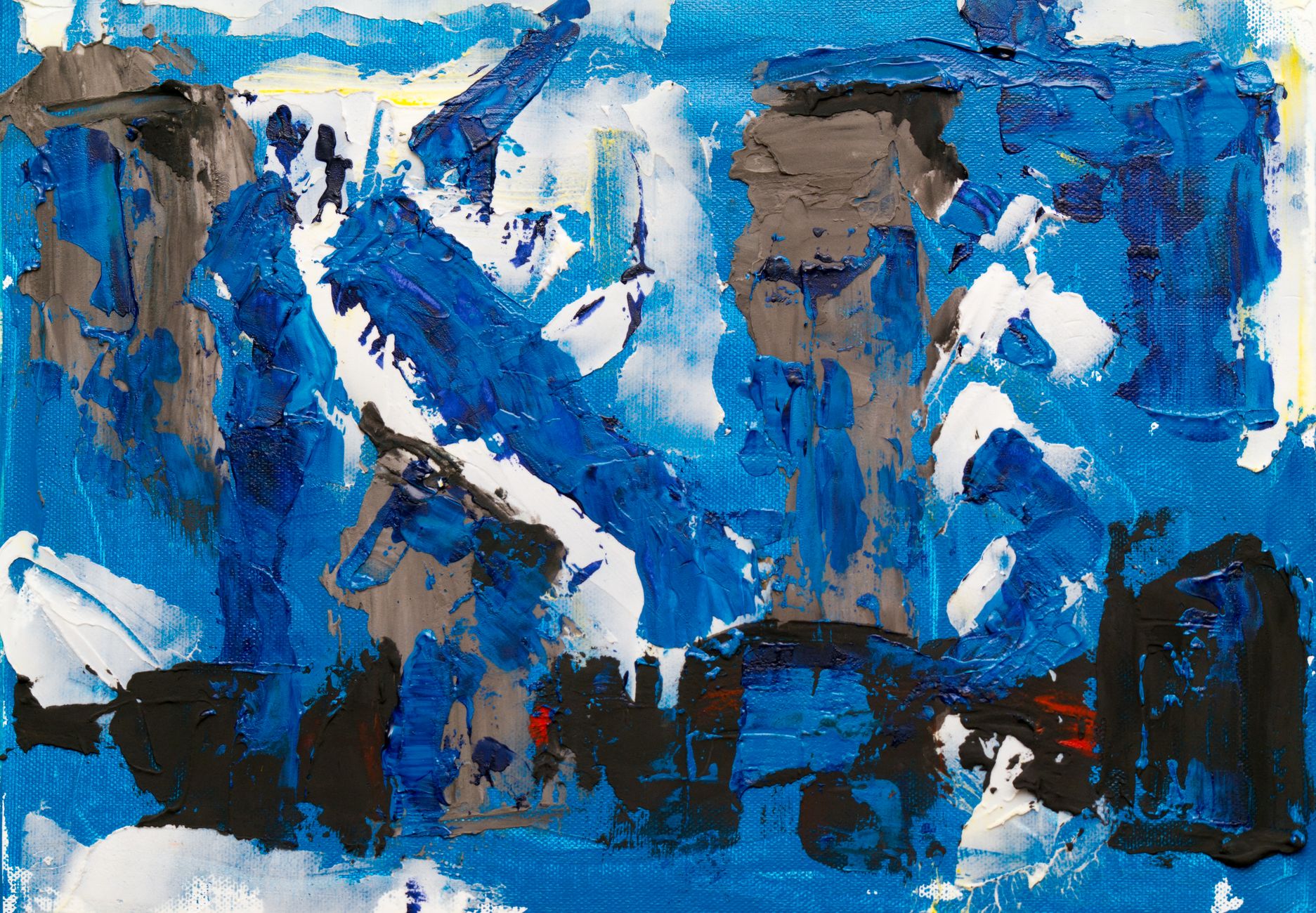
 Photo: Steve A Johnson / Pexels
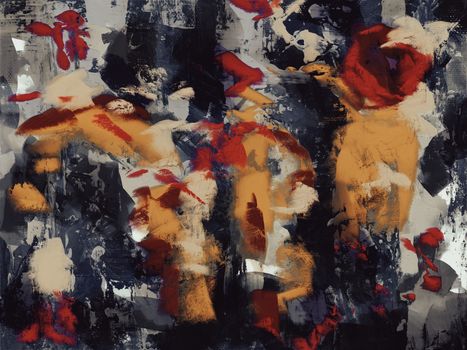 Photo: Steve A Johnson / Pexels
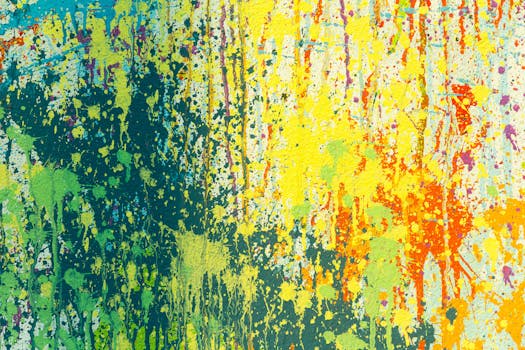 Photo: Dan Cristian Pădureț / Pexels
 Photo: Steve A Johnson / Pexels
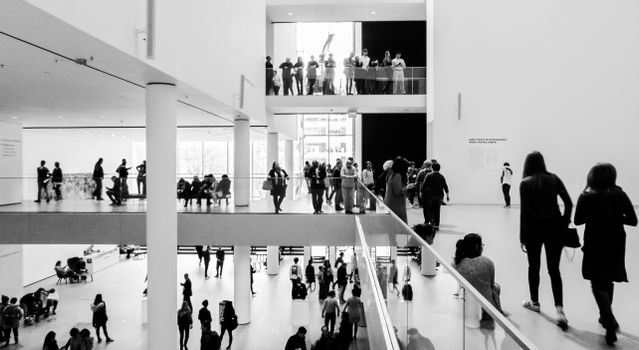 Photo: Bjorn Pierre / Pexels