✓ Photography art encompasses a vast spectrum of genres, from traditional landscapes to avant-garde conceptual pieces.
✓ Each type of photography art utilizes distinct techniques and approaches to convey specific messages or evoke emotions.
✓ Understanding different genres helps photographers develop their unique artistic voice and aids viewers in appreciating diverse works.
✓ Technological advancements have continually expanded the possibilities and definitions of photography as an art form.
How It Works
1
Identify Your Vision
Begin by contemplating what emotions, ideas, or stories you wish to convey through your photography. This initial reflection guides your choice of photographic art type.
2
Research Genres and Artists
Explore various types of photography art and study the works of renowned artists within those genres. This helps you understand established conventions and inspires new approaches.
3
Experiment with Techniques
Practice different photographic techniques relevant to your chosen art form, such as long exposure, macro, or composite imaging. Hands-on experience is crucial for mastery.
4
Develop Your Style
Continuously refine your approach, processing, and presentation to cultivate a distinctive artistic style. This iterative process is key to creating compelling photography art.
The Foundations of Fine Art Photography
Photo: Karl Solano / Pexels
Fine art photography stands as a cornerstone in the world of visual arts, distinguished by its primary intention: to express an idea, a message, or an emotion. Unlike commercial or journalistic photography, which often serves a practical purpose, fine art photography is created purely for aesthetic or conceptual reasons. The photographer acts as an artist, using the camera as their brush and light as their medium to craft images that transcend mere documentation. This genre emphasizes the photographer's subjective vision, allowing for profound personal interpretation and artistic freedom. It often involves meticulous planning, careful composition, and a deep understanding of light, shadow, and color, or their absence in monochrome. Historically, fine art photography fought for its recognition alongside traditional art forms like painting and sculpture. Pioneers like Alfred Stieglitz and Edward Weston championed its artistic validity, pushing boundaries and demonstrating its expressive power. Today, fine art photography is exhibited in galleries and museums worldwide, commanding significant appreciation and value.
Within fine art photography, several sub-genres flourish. Landscape photography, for instance, often falls under this umbrella when it moves beyond simple depiction to evoke a sense of awe, tranquility, or even environmental concern. Portraiture, too, can be fine art when it delves into the subject's psyche or explores universal human themes rather than just capturing a likeness. Still life photography, with its deliberate arrangements of objects, can become a powerful vehicle for metaphor and symbolism in the hands of a fine artist. The key differentiator is the artist's intent to create something beautiful, thought-provoking, or emotionally resonant, rather than simply recording reality. This often involves a deep engagement with the subject matter, whether it's a majestic mountain range, a fleeting expression, or an abstract arrangement of forms. The post-processing stage is also critical in fine art photography, where photographers often employ various digital or darkroom techniques to enhance the mood, refine the composition, and bring their artistic vision to full fruition. The ultimate goal is to produce an image that stands alone as a complete artistic statement, inviting contemplation and dialogue from the viewer. Understanding the nuances of artistic expression is crucial here.
Documentary and Photojournalism: Truth Through the Lens
Photo: Israel Torres / Pexels
While often seen as distinct from 'fine art,' documentary photography and photojournalism undeniably occupy a significant space within the broader spectrum of photography art, particularly when executed with a strong artistic vision and ethical commitment. These genres are fundamentally about storytelling, capturing reality, and bearing witness to events, people, and places. Photojournalism's primary aim is to report news and current events, often under tight deadlines, providing visual narratives that inform the public. Its artistic merit lies in the photographer's ability to compose compelling images under challenging circumstances, to capture decisive moments, and to convey the essence of a story with integrity and impact. Iconic photojournalistic images have shaped public opinion, sparked social change, and become indelible parts of collective memory. The ethical considerations in photojournalism are paramount, demanding objectivity and a commitment to truth, even while employing artistic sensibilities to enhance the narrative.
Documentary photography, on the other hand, often takes a more in-depth, long-term approach. It seeks to explore social issues, cultural phenomena, or the human condition over an extended period. While it shares photojournalism's commitment to reality, documentary work often allows for more personal interpretation and artistic license in its presentation. Photographers like Dorothea Lange, who documented the Great Depression, and Sebastião Salgado, known for his powerful black and white images of global social and environmental issues, exemplify the artistic depth and profound impact of documentary photography. Their works are not merely records; they are deeply felt artistic statements that provoke empathy, understanding, and a call to action. The aesthetic choices – composition, lighting, perspective, and even the choice of film or digital processing – are carefully considered to amplify the narrative and emotional weight of the images.
Both photojournalism and documentary photography, when practiced at their highest levels, transcend simple reporting to become powerful forms of art. They challenge viewers to confront realities, to reflect on human experiences, and to engage with the world around them in a more meaningful way. The artistry in these genres lies in the photographer's skill to not only capture a scene but to imbue it with a sense of significance, beauty, or poignancy that resonates deeply with the audience. They remind us that art can be both beautiful and profoundly impactful, serving as a mirror to society and a catalyst for change. The careful balance between objective truth and subjective artistic interpretation is what elevates these forms to true art.
Conceptual and Abstract Photography: Pushing Boundaries
Photo: Ralitsa Racheva / Pexels
Conceptual photography is an exciting and intellectually stimulating type of photography art where the idea or concept behind the image takes precedence over the aesthetic beauty of the photograph itself. Unlike traditional genres that might focus on capturing a beautiful landscape or a compelling portrait, conceptual photography uses the image as a vehicle to communicate a specific message, explore a philosophical question, or critique a social issue. The photograph often serves as an illustration of an abstract idea, requiring the viewer to engage intellectually with the work to decipher its meaning. This genre often involves meticulous planning, staging, and the deliberate arrangement of elements to convey the intended concept. The final image might be striking, disturbing, or even mundane, but its power lies in the thought it provokes. Artists like Cindy Sherman, with her self-portraits exploring identity and gender roles, are prime examples of conceptual photographers who have reshaped our understanding of what photography can achieve. The beauty in conceptual work often emerges from its cleverness, its ability to surprise, and its capacity to challenge preconceptions.
Abstract photography, while related to conceptual work in its departure from literal representation, focuses more on form, color, and texture, often divorcing subjects from their recognizable context. The goal here is to create images that do not depict reality as we typically perceive it, but rather explore the aesthetic qualities of visual elements themselves. An abstract photograph might feature extreme close-ups, unusual angles, or deliberate blur to transform ordinary objects or scenes into something entirely new and interpretive. It invites viewers to experience the image purely for its visual impact, encouraging them to find their own meaning and emotional response without the burden of recognizing a specific subject. This can involve finding patterns in nature, manipulating light to create unique shapes, or using reflections and refractions to distort reality. Artists like Aaron Siskind found abstract beauty in decaying walls and urban textures, demonstrating that art can be found in unexpected places.
Both conceptual and abstract photography challenge the traditional notions of what a photograph 'should' be. They push the boundaries of the medium, demonstrating its versatility and its capacity to transcend mere depiction. They demand active engagement from the viewer, inviting contemplation, interpretation, and a deeper understanding of visual language. These types of photography art often lead to profound discussions about the nature of reality, perception, and the role of the artist in shaping our understanding of the world. They showcase photography's incredible power to not just show, but to make us think and feel in entirely new ways. For those interested in innovative artistic practices, these genres offer endless possibilities for exploration.
Navigating the Diverse World of Photography Art: Tips for Appreciation and Creation
Photo: Agustina Tolosa / Pexels
The vast and varied landscape of photography art can be both inspiring and, at times, overwhelming. Whether you're an aspiring photographer or an eager art enthusiast, understanding how to approach and appreciate these diverse forms can significantly enrich your experience. Here are some key tips for navigating this vibrant world:
* **For Viewers: Look Beyond the Obvious:** When encountering a photograph, especially one that doesn't immediately 'make sense,' resist the urge to dismiss it. Instead, ask yourself: What is the artist trying to communicate? How does the light, composition, or subject matter contribute to a larger idea or feeling? What questions does it raise? The most profound art often isn't immediately digestible.
* **For Viewers: Research the Artist and Context:** Understanding the photographer's background, their artistic statement, or the historical/social context in which a piece was created can unlock deeper layers of meaning. Many galleries and online platforms provide artist statements that offer invaluable insights.
* **For Creators: Find Your Voice First:** Before settling on a specific genre, experiment broadly. Shoot landscapes, portraits, street scenes, abstracts, and conceptual pieces. This exploration will naturally lead you to discover what truly resonates with your interests and what kind of stories you are compelled to tell. Your artistic voice is an evolving entity.
* **For Creators: Master the Technical, Then Break the Rules:** A solid understanding of photographic fundamentals – exposure, focus, composition, and light – is crucial, regardless of the art type. Once you grasp these rules, you'll know how and when to intentionally break them to achieve your unique artistic vision. Technical proficiency provides the freedom for creative expression.
* **For Creators: Embrace Post-Processing as Part of the Art:** For many types of photography art, particularly fine art and conceptual work, post-processing is an integral part of the creative process. It's where the photographer refines the mood, enhances the narrative, and brings their vision to full realization. View it as an extension of your artistic toolkit, not just a correction tool.
* **For Both: Engage with the Community:** Join photography clubs, attend exhibitions, participate in online forums, and seek out critiques. Engaging with other photographers and artists can provide fresh perspectives, constructive feedback, and a sense of belonging within the larger art community.
By adopting these approaches, both creators and appreciators can deepen their connection to the rich and ever-evolving world of photography art, fostering a greater understanding and appreciation for its immense expressive power.
Comparison
Feature
Fine Art Photography
Documentary Photography
Conceptual Photography
Abstract Photography
Primary Goal
Emotional/Aesthetic Expression
Inform/Bear Witness
Communicate an Idea
Explore Form/Color/Texture
Emphasis
Subjective Vision/Beauty
Objective Reality/Story
Underlying Concept
Visual Elements
Planning Level
High (often staged/composed)
Varies (opportunistic/planned)
Very High (idea-driven)
High (composition/light focus)
Viewer Engagement
Emotional/Contemplative
Informative/Empathetic
Intellectual/Interpretive
Sensory/Interpretive
Post-Processing
Extensive (artistic enhancement)
Moderate (enhances truth)
Varies (serves concept)
Extensive (manipulates reality)
What Readers Say
★★★★★
"This article brilliantly dissects the various types of photography art. I especially appreciated the clear distinction between fine art and documentary, which I often confused. It's a fantastic guide for anyone looking to understand the depth of photographic expression."
Sarah J. · Portland, OR
★★★★★
"As an aspiring photographer, this piece opened my eyes to so many possibilities beyond just taking pretty pictures. The emphasis on conceptual photography really resonated with me, inspiring me to think more deeply about my work's message."
Mark T. · Austin, TX
★★★★★
"I've always loved photography but never fully grasped the nuances between different artistic styles. This article provided such clarity, helping me to appreciate the intentionality behind each type. My next gallery visit will be much more informed!"
Emily R. · New York, NY
★★★★★
"A very comprehensive overview, though I would have loved to see a bit more on street photography as a distinct art form. Still, the breakdown of conceptual and abstract types was incredibly insightful and well-explained."
David L. · Chicago, IL
★★★★★
"This was exactly what I needed! As a digital artist exploring new mediums, understanding the 'types of photography art' helped me identify how I can integrate photographic elements into my own conceptual pieces. Truly helpful for creative cross-pollination."
Jessica M. · Los Angeles, CA
Frequently Asked Questions
What defines photography as 'art' rather than just a picture?
Photography becomes 'art' when the photographer's primary intent is to express an idea, emotion, or aesthetic vision, rather than solely to document or inform. It involves deliberate artistic choices in composition, lighting, subject matter, and post-processing to create a subjective statement or evoke a particular response from the viewer.
Is street photography considered a type of photography art?
Absolutely. While it shares elements with photojournalism in capturing candid moments, street photography often elevates these observations into art through compelling composition, unique perspectives, and its ability to comment on the human condition or urban environment, making it a powerful form of documentary and fine art.
How can I develop my own artistic style in photography?
Developing your artistic style involves continuous practice, self-reflection, and experimentation. Shoot extensively, analyze your own work and that of others, identify themes or subjects that deeply resonate with you, and consistently refine your technical skills and post-processing techniques to create a distinctive visual signature.
Does expensive equipment determine the quality of photography art?
No, expensive equipment does not determine the quality of photography art. While professional gear can offer certain advantages, the artistic merit of a photograph stems from the photographer's vision, skill, and ability to convey a message or emotion. Many iconic works were created with very basic equipment.
What's the difference between conceptual photography and abstract photography?
Conceptual photography prioritizes the idea or message, using the image to illustrate a specific concept, often staged. Abstract photography, conversely, focuses on form, color, and texture, divorcing subjects from their recognizable context to create a non-literal visual experience, often relying on aesthetic rather than explicit narrative.
Who should explore different types of photography art?
Anyone with an interest in visual expression, storytelling, or expanding their creative horizons should explore different types of photography art. This includes aspiring photographers, seasoned artists looking for new inspiration, art enthusiasts, and anyone seeking a deeper understanding and appreciation of photographic works.
Are there any 'wrong' types of photography art to pursue?
There are no 'wrong' types of photography art to pursue, as art is inherently subjective and personal. The 'best' type is the one that allows you to express your vision most authentically and effectively. Every genre offers unique creative challenges and rewards.
What are some emerging trends in photography art?
Emerging trends in photography art include increased use of AI in image generation and manipulation, exploration of environmental and social justice themes, immersive and interactive photographic experiences, and a continued blurring of lines between traditional photography and other digital art forms like CGI and virtual reality.
Embark on your own creative journey through the fascinating world of photography art. Discover the types that speak to your soul and start capturing your unique vision, transforming moments into timeless expressions.

 Photo: Karl Solano / Pexels
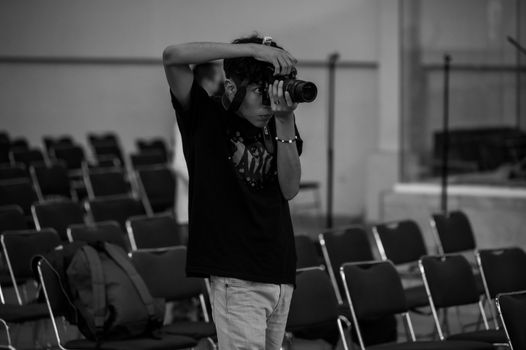 Photo: Israel Torres / Pexels
 Photo: Ralitsa Racheva / Pexels
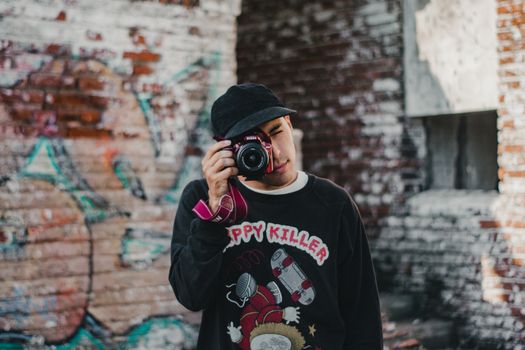 Photo: Agustina Tolosa / Pexels