Exploring the Different Types of Sculpture: A Comprehensive Guide
June 24, 2026 18 min read 3,658 words
Dive into the rich history and diverse techniques that define the captivating world of sculptural art, from ancient forms to contemporary masterpieces.
Discover Sculptural Art
The Foundations of Form: Understanding Traditional Sculpture Techniques
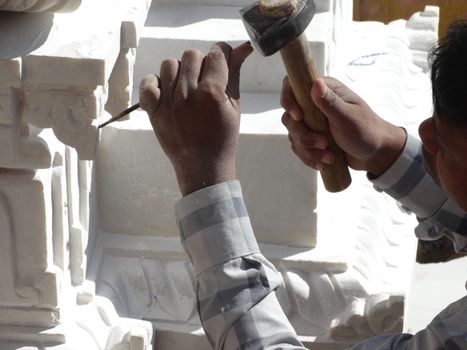 Photo: Manisha Savla / Pexels
Sculpture, as an art form, has captivated humanity for millennia, transforming raw materials into expressions of beauty, power, and narrative. To truly appreciate the vast spectrum of what constitutes sculpture, one must first delve into its foundational techniques. These methods, refined over centuries, dictate not only the process but also profoundly influence the final aesthetic and conceptual impact of a piece. The four primary traditional techniques are carving, modeling, casting, and assemblage, each offering a unique pathway for the artist's vision.
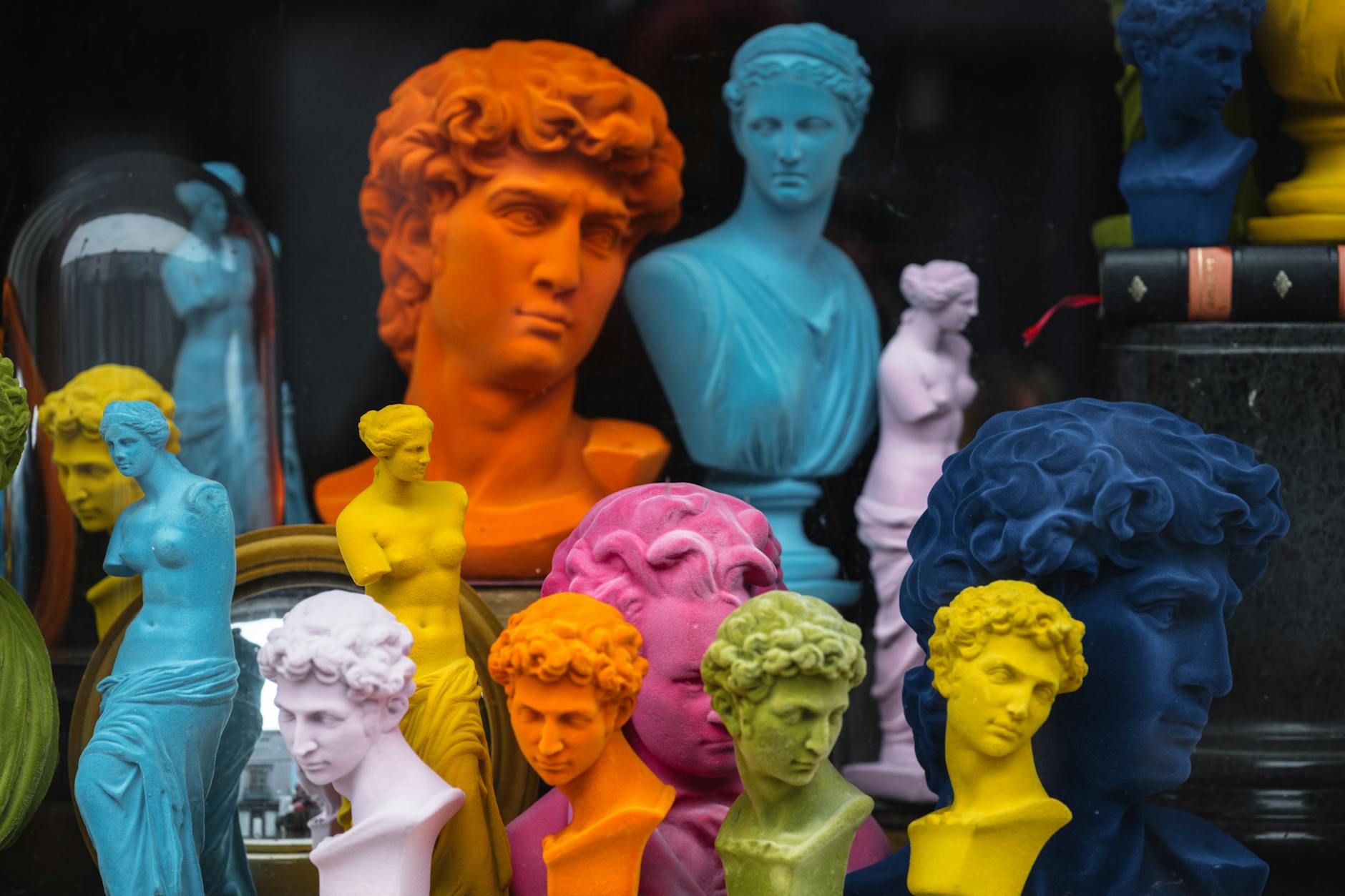
Carving is perhaps the most ancient and direct form of sculpture, involving the removal of material to reveal the desired shape. This subtractive process requires immense skill, precision, and an intuitive understanding of the material's properties. Stone, such as marble, granite, and limestone, has been a favored medium for carvers throughout history, yielding iconic works from ancient Greek statues to Renaissance masterpieces. Wood carving, while softer and more yielding, demands an understanding of grain and structural integrity. The challenge lies in the irreversible nature of each cut; a mistake cannot simply be added back. This method often imbues the sculpture with a sense of monumentality and permanence, reflecting the enduring nature of the material itself. Think of Michelangelo's 'David' – a testament to the power of carving to liberate a form from a block of marble.
Modeling, in contrast to carving, is an additive process where soft, pliable materials are built up, shaped, and manipulated. Clay, wax, and plaster are common choices, allowing for greater spontaneity and flexibility. Artists can add, subtract, and reform elements until the desired shape is achieved. This technique is often used for creating maquettes or preliminary studies for larger works, especially those intended for casting. However, many finished sculptures exist purely as modeled forms, celebrated for their directness and the visible hand of the artist. The tactile quality of modeled works often conveys a sense of immediacy and organic fluidity. For example, Auguste Rodin's expressive figures often began as intensely modeled clay forms, capturing raw emotion and movement. The ease of manipulation in modeling allows for intricate details and complex compositions, making it a versatile choice for capturing dynamic poses and nuanced expressions. It's a process that allows for iterative refinement, a stark contrast to the unforgiving nature of carving. Understanding these fundamental differences is key to appreciating the
artistic choices made by sculptors across different eras.
Casting is a reproductive process that involves creating a mold from an original model and then pouring a liquid material, typically molten metal (like bronze), resin, or plaster, into the mold. Once the material solidifies, the mold is removed, revealing a duplicate of the original. Bronze casting, using the lost-wax method, is particularly renowned for its ability to capture fine details and for the material's strength and longevity. This technique allows for the creation of multiple editions of a single sculpture and enables artists to realize large-scale works that might be impractical or impossible to create directly in metal. The initial modeling phase is crucial here, as the quality of the cast depends entirely on the fidelity of the mold to the original. Many public monuments and historical figures are rendered in cast bronze, ensuring their preservation for centuries. The versatility of casting means that a delicate clay model can be transformed into an enduring, weather-resistant metal sculpture, making it a cornerstone of sculptural production for millennia. The journey from a soft, ephemeral model to a hard, permanent artwork through casting highlights the transformative power inherent in sculptural processes.
Assemblage is a more contemporary technique, emerging prominently in the 20th century, where disparate objects and materials are joined together to create a new three-dimensional form. This constructive method often recontextualizes everyday items, found objects, and industrial debris, challenging traditional notions of what constitutes art and what materials are acceptable. Artists like Pablo Picasso and Robert Rauschenberg were pioneers in assemblage, using it to comment on consumer culture, society, and the nature of perception. The beauty of assemblage lies in its boundless potential for creativity and its ability to tell stories through the juxtaposition of unexpected elements. It blurs the lines between sculpture and other art forms, inviting viewers to reconsider the inherent value and meaning of objects. Unlike the singular focus of carving or the replication of casting, assemblage thrives on diversity and synthesis, making each piece a unique constellation of elements. This approach opens up a world of possibilities for artists to experiment with texture, color, and narrative in entirely new ways, pushing the boundaries of what sculpture can be. The conceptual richness of assemblage often stems from the dialogue created between its various components, transforming the ordinary into the extraordinary.
Exploring Forms and Materials: From Relief to Installation Art
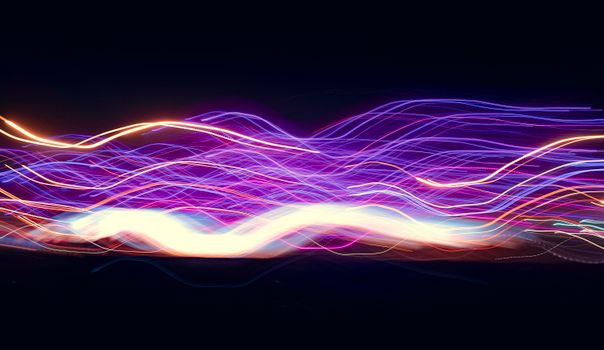 Photo: Benjamin Farren / Pexels
Beyond the fundamental techniques, sculpture can also be categorized by its form and the materials employed, leading to an incredible diversity of artistic expression. Understanding these distinctions helps us appreciate the varying intentions and impacts of different sculptural works. The form a sculpture takes, whether freestanding or integrated into an architectural surface, dictates how it interacts with its environment and how viewers experience it. Similarly, the choice of material is never arbitrary; it profoundly influences the work's aesthetic, durability, and symbolic meaning.
Freestanding sculpture, also known as 'sculpture in the round,' is designed to be viewed from all sides. It occupies three-dimensional space independently and often invites viewers to walk around it, experiencing its nuances from multiple perspectives. This type of sculpture is perhaps what most people envision when they hear the word 'sculpture.' From ancient Greek kouroi and korae to modern abstract forms, freestanding works offer a complete spatial experience. The artist must consider every angle and how the form resolves itself in space. The absence of a background or a fixed vantage point means that every curve, plane, and void contributes to the overall presence of the piece. This complete immersion in space allows for a dynamic relationship between the viewer and the artwork, encouraging active engagement and exploration. Think of any statue in a public park; its intent is to be observed from all angles, revealing different aspects as you circumnavigate it.
Relief sculpture, on the other hand, is attached to a solid background, typically a wall or panel, and projects outwards. It exists in a space between painting and freestanding sculpture, possessing three-dimensionality but lacking a full, independent form. There are several types of relief: high relief (altorilievo), where figures project significantly from the background, sometimes almost entirely detaching; bas-relief (basso-rilievo) or low relief, where the projection is shallow, often used for subtle effects; and sunken relief (coelanaglyph), primarily found in ancient Egyptian art, where the carving is recessed below the surface of the background. Relief sculpture is often narrative, used to tell stories, commemorate events, or decorate architectural elements. Its fixed viewing plane allows for a more controlled narrative flow, guiding the viewer's eye along the surface. The Parthenon frieze, with its intricate depiction of a procession, is a magnificent example of high relief, using the interplay of light and shadow to create depth and drama on a flat surface.
Beyond traditional forms, the 20th and 21st centuries have witnessed an explosion of new sculptural types, largely driven by experimental approaches to materials and concepts. Kinetic sculpture, for instance, incorporates movement as an integral part of its design, either through natural forces like wind or through mechanical means. Artists like Alexander Calder, with his iconic mobiles, transformed sculpture from static objects into dynamic, ever-changing compositions. Light sculpture utilizes light as its primary medium, shaping and manipulating it to create forms, atmospheres, and illusions. This often involves neon, LEDs, projections, and reflective surfaces, blurring the lines between art, technology, and environment. Environmental sculpture, or Land Art, is created in or for the outdoors, often using natural elements like earth, rocks, and vegetation. These works are frequently site-specific, designed to interact with and transform their natural surroundings, sometimes being ephemeral and changing with the seasons or weathering. Robert Smithson's 'Spiral Jetty' is a seminal example, demonstrating how art can engage directly with the landscape on a monumental scale.
Installation art is another significant development, transforming an entire space into an artwork. Unlike traditional sculpture, which is typically a singular object, an installation is an immersive environment that viewers can enter and experience. It often incorporates various media, including sculpture, sound, light, video, and found objects, to create a specific atmosphere or convey a particular concept. The viewer's presence and interaction are often crucial to the experience. These works challenge the conventional gallery setting and encourage a more active, sensory engagement. The ephemeral nature of many installations also emphasizes the experience over the object, reflecting a shift in artistic priorities. Understanding the spectrum from the contained form of relief to the expansive, immersive nature of installation art reveals the extraordinary breadth and adaptability of sculptural practice in contemporary art. Each form and material choice opens up new avenues for artistic exploration and engagement, continuously redefining the boundaries of what sculpture can be.
Modern and Contemporary Sculpture: Pushing Boundaries and Redefining Art
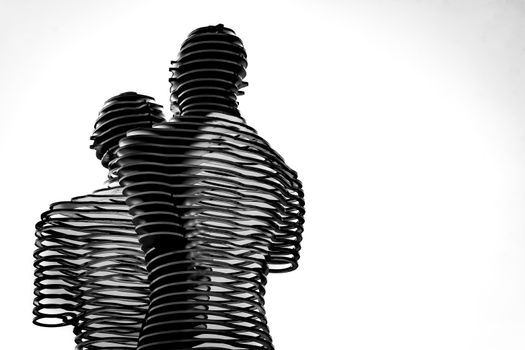 Photo: Mesut Yalçın / Pexels
The transition from classical to modern and contemporary sculpture marks a profound shift in artistic philosophy, materials, and public perception. The 20th century, in particular, was a period of radical experimentation, challenging established norms and expanding the very definition of what sculpture could be. This era saw artists breaking away from traditional representation and embracing abstraction, new technologies, and a broader range of materials, reflecting the rapidly changing world around them. Understanding these developments is crucial for appreciating the diverse landscape of
contemporary art.
One of the most significant shifts was the move towards abstraction. While earlier sculpture often aimed for realistic representation or idealized forms, modern sculptors began to explore geometric shapes, organic forms, and non-representational compositions. Artists like Constantin Brâncuși simplified forms to their essential elements, focusing on purity of line and material. His smooth, polished bronzes and marbles, such as 'Bird in Space,' emphasize the inherent beauty of the material and the elegance of abstract form, inviting contemplation rather than literal interpretation. Henry Moore, another pioneer, explored the human figure in abstract ways, often creating monumental, reclining forms that resonate with landscapes and natural elements, emphasizing volume, mass, and void. This departure from strict mimesis opened up new avenues for emotional and conceptual expression, allowing sculpture to engage with universal themes rather than specific narratives.
The introduction of new materials also played a pivotal role in redefining sculpture. The industrial revolution made steel, aluminum, plastics, and various composite materials readily available, offering artists unprecedented possibilities. Constructivism, an artistic and architectural philosophy that originated in Russia in the early 20th century, championed the use of industrial materials and techniques to create abstract, geometric forms. Artists like Naum Gabo and Antoine Pevsner used plastics and metals to build transparent, open structures that explored space and volume in novel ways, emphasizing construction over carving or modeling. The use of 'found objects' and 'readymades,' pioneered by artists like Marcel Duchamp with his infamous 'Fountain' (a porcelain urinal), fundamentally questioned the definition of art and the role of the artist. This concept paved the way for assemblage and junk art, where everyday items are recontextualized and elevated to artistic status, often carrying social or political commentary.
Performance art and conceptual art further blurred the lines between sculpture and other disciplines. While not always producing a tangible object, performance art can be seen as a form of ephemeral sculpture, where the artist's body, actions, and the interaction with an audience create a temporary, living artwork. Conceptual art prioritizes the idea or concept behind the work over its physical manifestation. In some cases, the 'sculpture' might exist only as a set of instructions, a diagram, or a mental image, challenging the traditional notion of a physical art object. Artists like Joseph Kosuth explored the relationship between language, idea, and object, pushing the boundaries of what art could be.
Site-specific sculpture and public art have also gained prominence, moving art out of the gallery and into the public realm. These works are designed specifically for a particular location, taking into account its history, architecture, and social context. Artists like Richard Serra create monumental steel sculptures that interact with urban landscapes, altering perceptions of space and scale. Public art often aims to engage communities, provoke thought, or commemorate events, becoming an integral part of the civic environment. The Vietnam Veterans Memorial by Maya Lin, with its reflective black granite walls inscribed with names, is a powerful example of how site-specific sculpture can evoke profound emotional responses and serve as a place of collective memory. These contemporary developments demonstrate sculpture's enduring capacity for innovation and its ability to reflect and shape our understanding of the world.
Choosing Your Path: Tips for Aspiring Sculptors and Art Enthusiasts
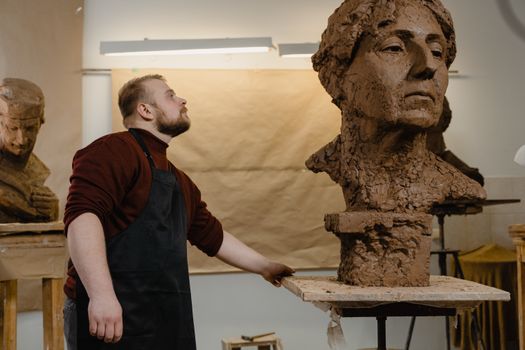 Photo: Tima Miroshnichenko / Pexels
Embarking on a journey into the world of sculpture, whether as an aspiring artist or an appreciative enthusiast, can be incredibly rewarding. The vast array of different types of sculpture means there's a niche for every interest and skill level. For those looking to create, understanding where to start can be daunting. For those looking to appreciate, knowing how to approach a piece can deepen the experience significantly. Here are some tips to guide you through this captivating art form.
**For Aspiring Sculptors:**
* **Start Simple and Accessible:** Don't feel pressured to begin with monumental stone carving. Clay, polymer clay, or even paper mache are excellent, forgiving materials for beginners. They allow you to practice modeling techniques, understand three-dimensional form, and experiment without significant financial investment or specialized tools.
* **Learn the Fundamentals:** Take a class or follow online tutorials that focus on basic principles like positive and negative space, balance, proportion, and texture. These foundational concepts are universally applicable across all sculptural types.
* **Experiment with Materials:** Once comfortable with basic modeling, try different materials. Work with wood scraps for assemblage, explore wire for armature, or even experiment with found objects. Each material will teach you new properties and limitations.
* **Study the Masters (and Contemporaries):** Visit museums, galleries, and public art installations. Observe how different artists have approached form, material, and concept. Analyze their techniques and consider what makes their work impactful. Don't just look at classical pieces; explore modern and contemporary sculptors who are pushing boundaries.
* **Embrace the Process:** Sculpture is often a slow, iterative process. Be patient with yourself, learn from your mistakes, and enjoy the journey of transforming an idea into a tangible form. Document your process, from initial sketches to finished work, to see your own growth.
**For Art Enthusiasts and Collectors:**
* **Engage with the Work:** Don't just passively observe. Walk around freestanding sculptures, consider the viewpoint of relief works, and immerse yourself in installations. Think about how the sculpture interacts with its environment.
* **Question the Material Choice:** Ask yourself why the artist chose a particular material. Does it convey strength, fragility, warmth, or coldness? How does the material contribute to the overall message or aesthetic?
* **Consider the Scale and Context:** How does the size of the sculpture affect its impact? Is it monumental, intimate, or human-scale? Where is it located, and how does its placement inform its meaning? A sculpture designed for a gallery might have a different intent than one in a public square.
* **Explore the Narrative or Concept:** Does the sculpture tell a story? Is it abstract, and if so, what emotions or ideas does it evoke? Research the artist and the historical or cultural context of the work to gain deeper insight.
* **Attend Workshops or Lectures:** Many museums and art centers offer programs that delve into sculptural techniques and history. These can provide invaluable context and enhance your appreciation of the art form. The more you understand the 'how' and 'why,' the richer your experience will be.
By actively engaging with sculpture, both creatively and intellectually, you open yourself up to a profound and multifaceted art form that has shaped human culture for millennia. Whether you're molding clay in your studio or contemplating a bronze masterpiece in a museum, the world of sculpture offers endless opportunities for discovery and inspiration.