Mastering Art: Exploring Different Types of Painting Techniques

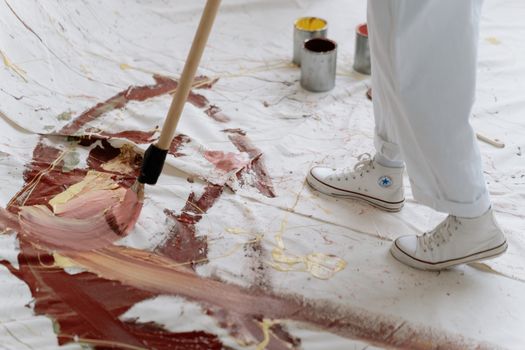
An artist uses a brush to paint abstract patterns on a large canvas placed on the floor.Photo: cottonbro studio / Pexels

Mastering Art: Exploring Different Types of Painting Techniques

Unlock your artistic potential by understanding the diverse painting techniques that have shaped centuries of creative expression.

Start Your Artistic Journey

Key Takeaways

  • ✓ Painting techniques span thousands of years, evolving with human civilization.
  • ✓ Each technique uses unique binders and pigments, influencing texture and drying time.
  • ✓ Mastering a technique often involves understanding its historical context and purpose.
  • ✓ Experimentation across different techniques can lead to a unique personal style.

How It Works

1
Choose Your Medium

Select the type of paint you wish to work with, such as oil, acrylic, or watercolor. Each medium has distinct properties affecting application and appearance.

2
Understand the Technique

Research the specific methods associated with your chosen medium, like impasto for oils or washes for watercolor. Learn about brushstrokes, layering, and drying times.

3
Gather Your Materials

Acquire the necessary tools including brushes, canvases or paper, palettes, and solvents. Quality materials can significantly impact your painting experience and results.

4
Practice and Experiment

Begin painting, focusing on applying the techniques you've learned. Don't be afraid to experiment and combine different approaches to develop your unique artistic voice.

The Enduring Legacy of Oil Painting Techniques

Oil painting, revered for its rich colors, exceptional blendability, and historical significance, stands as a cornerstone of fine art. Originating in the 15th century, primarily popularized by early Netherlandish painters like Jan van Eyck, it rapidly became the dominant medium for centuries, favored by masters such as Leonardo da Vinci, Rembrandt, and Vincent van Gogh. The unique properties of oil paint – pigments suspended in a drying oil, typically linseed oil – allow for a remarkable range of techniques. One of the most characteristic is **glazing**, where thin, translucent layers of paint are applied over opaque underpaintings. This method creates a luminous depth and intensity of color, as light passes through multiple layers before reflecting off the opaque base. Each glaze slightly alters the underlying color, building complex optical effects that are difficult to achieve with other mediums. The slow drying time of oil paint, which can range from days to weeks, is often seen as both a challenge and an advantage. It allows artists ample time for **wet-on-wet** (alla prima) painting, where colors are blended directly on the canvas, creating soft transitions and seamless gradients. This technique is particularly effective for capturing fleeting moments or for expressive, spontaneous brushwork. Conversely, the slow drying also supports **layering**, where artists can build up paint in multiple stages, allowing each layer to dry before adding the next. This enables meticulous detail, precise color adjustments, and the construction of complex compositions. Another prominent technique is **impasto**, where paint is applied thickly, often with a palette knife or heavily loaded brush, creating visible textures and sculptural effects on the canvas surface. This adds a tactile dimension to the artwork, allowing light to catch the raised paint and enhancing the painting's physicality and emotional impact. Think of Van Gogh's swirling skies or Rembrandt's richly textured garments. The versatility of oil painting extends to its ability to be thinned with solvents like turpentine or mineral spirits, allowing for washes and delicate transparent effects, or used straight from the tube for maximum opacity and body. The historical depth and continuous innovation within oil painting continue to captivate artists and viewers alike, making it an indispensable part of understanding art history and artistic expression.

Dynamic Applications of Acrylic Painting Techniques

Acrylic paint, a relatively modern invention compared to its oil and watercolor counterparts, has rapidly gained immense popularity since its commercial introduction in the mid-20th century. Its synthetic polymer emulsion binder offers an incredible array of advantages and opens up a vast spectrum of artistic possibilities, making it a favorite for both traditional and experimental artists. One of the most significant characteristics of acrylics is their **fast drying time**. This allows artists to work quickly, layer colors without long waits, and build up complex compositions in a single session. This rapid drying can be managed with retarders to extend working time or embraced for energetic, spontaneous brushwork. The fast drying also makes acrylics ideal for **glazing** similar to oils, but with the benefit of quicker layering. Thin, transparent layers can be built up rapidly, creating luminosity and depth in a fraction of the time. Another key feature is the paint's **versatility**. Acrylics can be thinned with water to achieve watercolor-like washes and stains, or used in thick, impasto applications akin to oil paint. They maintain excellent color saturation and can be applied to virtually any non-oily surface, including canvas, wood, paper, fabric, and even metal. Artists often use acrylics for **mixed media** works, combining them with collage elements, pastels, or inks, as their quick drying and adhesive qualities make them an excellent binder for various materials. The ability to create sharp edges and flat, opaque areas of color is another hallmark of acrylics, making them highly suitable for **hard-edge painting** and **color field painting**, where smooth transitions and precise forms are paramount. Furthermore, acrylics are known for their vibrant, non-fading colors and their durability once dry, forming a flexible, water-resistant film. This makes them a robust choice for public art, murals, and pieces intended for long-term display. The sheer adaptability of acrylics means that artists can seamlessly transition between different styles and techniques within the same painting, from delicate details to broad, expressive strokes, making it a truly dynamic and accessible medium for contemporary art.

The Delicate Artistry of Watercolor and Gouache Techniques

Watercolor and gouache, both water-based mediums, share a common lineage but offer distinct expressive qualities, appealing to artists seeking transparency, luminosity, or vibrant opacity. **Watercolor**, perhaps the most delicate of painting techniques, relies on pigments suspended in a water-soluble binder, typically gum arabic. Its defining characteristic is **transparency**. Artists apply thin washes of color, allowing the white of the paper to shine through and provide luminosity. The beauty of watercolor often lies in its spontaneous flow and the ethereal quality of its layers. Techniques like **washes**—broad, even applications of diluted color—are fundamental, ranging from flat washes for uniform areas to graded washes that transition smoothly from dark to light. **Wet-on-wet** is another cornerstone technique, where wet paint is applied to a wet surface, allowing colors to bleed and blend organically, creating soft, diffused effects. Conversely, **wet-on-dry** involves applying wet paint to a dry surface, resulting in sharper edges and more controlled applications. The **lifting** technique, where wet or even dried paint is removed with a damp brush or sponge, allows for creating highlights or correcting mistakes. Mastering watercolor often involves understanding water ratios and how pigments interact on paper, leading to a unique interplay of control and serendipity. Achieving vibrant watercolors requires careful layering and preserving the light values of the paper itself. **Gouache**, often referred to as opaque watercolor, shares the same water-soluble binder but contains additional inert white pigment (like chalk) which makes it opaque. This opacity is its defining feature, allowing artists to paint light colors over dark, much like acrylics or oils. Gouache offers a velvety, matte finish when dry, and its ability to create flat, even areas of color makes it popular for illustration, graphic design, and poster art. Techniques for gouache often involve building up layers of opaque color, similar to traditional painting, but with the quick drying time of a water-based medium. Artists can also thin gouache with water to achieve semi-transparent washes, blending its opaque qualities with watercolor-like effects. The ability to rework dried layers by rewetting them provides a degree of flexibility. While watercolor celebrates transparency and the luminosity of light, gouache embraces boldness and the ability to cover, offering a different yet equally captivating artistic experience within the water-based painting family. Both mediums, despite their differences, demand a keen understanding of their unique properties to harness their full potential.

Exploring Specialized and Experimental Painting Techniques

Beyond the foundational mediums of oil, acrylic, and watercolor, the world of art boasts an incredible array of specialized and experimental painting techniques that push the boundaries of conventional artistry. These methods often utilize unique materials, unconventional tools, or innovative processes to achieve distinct visual and textural effects. One such technique is **encaustic painting**, an ancient method revived in modern times, which involves heating beeswax and mixing it with colored pigments. The molten wax is then applied to a rigid surface, often wood, using brushes or other tools. Once cooled, the wax hardens, creating a durable, luminous, and deeply textured surface. Encaustic allows for layering, carving, and incorporating other materials, offering a rich tactile experience. The process demands quick work due to the rapid cooling of the wax, but the resulting artwork possesses a unique depth and archival quality. Another fascinating area is **fresco painting**, a technique where pigments are applied to wet plaster. As the plaster dries, the pigment binds with it, becoming an integral part of the wall itself. This results in incredibly durable murals, as seen in ancient Roman and Renaissance art. True fresco (buon fresco) requires immense speed and precision, as artists must complete sections before the plaster dries. A variation, fresco secco, involves painting on dry plaster, but it is less durable. Both techniques highlight the direct interaction of paint with architectural surfaces. **Tempera painting**, particularly egg tempera, was a dominant medium before the advent of oil paint. It involves mixing ground pigments with an egg yolk binder, which creates a fast-drying, opaque, and highly durable paint. Egg tempera is known for its luminous, jewel-like colors and its ability to render fine detail through meticulous cross-hatching. Its precise nature and rapid drying require a different approach than the blending possible with oils. Contemporary artists also delve into **mixed media painting**, which involves combining various materials and techniques within a single artwork. This could mean integrating collage, drawing, printmaking, and different paint types (acrylics, oils, inks) to create layered, multi-dimensional pieces. This approach emphasizes experimentation and the breaking down of traditional artistic boundaries, allowing for unparalleled creative freedom. From the historical depth of encaustic and fresco to the modern innovations of mixed media, these techniques offer artists endless avenues for exploration and expression, continually redefining what painting can be.

Comparison

FeatureOil PaintingAcrylic PaintingWatercolor PaintingGouache Painting
Drying TimeSlow (days/weeks)Fast (minutes/hours)Fast (minutes)Fast (minutes)
TransparencyVariable (opaque to glazed)Variable (opaque to transparent)High (luminous)Low (opaque)
BlendabilityExcellent (wet-on-wet)Good (can be extended)Good (wet-on-wet)Good (can be reactivated)
Durability (once dry)Very HighHigh (flexible)Moderate (fragile)Moderate (fragile)
Primary SolventTurpentine/Mineral SpiritsWaterWaterWater

What Our Readers Say

5 ★★★★★

"This article on different types of painting techniques opened my eyes to so many possibilities! I always stuck to acrylics, but now I'm excited to try gouache for its opaque qualities."

5 ★★★★★

"As a beginner, I found the breakdown of oil vs. acrylic incredibly helpful. It clarified why certain artists choose specific mediums, guiding my next purchases."

5 ★★★★★

"After reading this, I finally understood how to achieve better glazes in my oil paintings. My latest landscape now has a depth I couldn't achieve before. Fantastic resource!"

4 ★★★★☆

"While very thorough, I would have loved to see a bit more on modern digital painting as a comparison. Still, an excellent guide for traditional mediums and their unique techniques."

5 ★★★★★

"I'm an art educator, and I'll be recommending this to my students. The clear explanations of different types of painting techniques are perfect for understanding the fundamentals before diving into practice."

Frequently Asked Questions

What is the easiest painting technique for beginners?
For beginners, acrylic painting is often considered the easiest due to its fast drying time, water-solubility (easy cleanup), and versatility. It allows for quick layering and corrections, reducing frustration and encouraging experimentation without long waits.
Is oil painting difficult to learn?
Oil painting can be challenging for beginners due to its slow drying time and the need for specific solvents for thinning and cleanup. However, its blendability offers unique advantages for smooth transitions and rich textures, making it highly rewarding with practice.
How do I choose the right painting technique for my style?
Consider what you want to achieve: Do you prefer vibrant, quick results (acrylic)? Luminous depth and blending (oil)? Ethereal transparency (watercolor)? Or bold, opaque colors (gouache)? Experimentation is key to finding the best fit for your artistic vision.
What is the typical cost associated with starting different painting techniques?
The initial cost varies. Watercolor and acrylic starters kits can be relatively inexpensive ($20-$50). Oil painting often requires a larger initial investment for quality paints, brushes, and solvents ($50-$150+). Specialty techniques like encaustic can be more costly for equipment.
How does mixed media painting differ from traditional techniques?
Mixed media painting intentionally combines various art forms and materials—like paint, collage, ink, and drawing—within a single artwork. Unlike traditional techniques that usually stick to one medium, mixed media focuses on layering and integrating diverse elements for a multi-textured, complex piece.
Who should explore specialized painting techniques like fresco or encaustic?
Artists interested in historical methods, unique textures, and durable, often architectural-scale works should explore techniques like fresco or encaustic. They require specific materials, a different approach to application, and often a passion for ancient or unconventional processes.
Are there any health risks associated with certain painting techniques?
Some painting techniques, particularly oil painting, can involve solvents (turpentine, mineral spirits) that produce fumes, which should be used in well-ventilated areas. Pigments in all mediums can be toxic if ingested; always practice good studio hygiene and avoid eating or drinking while painting.
What future trends are emerging in painting techniques?
Future trends in painting techniques often involve integrating digital tools with traditional methods, sustainable and eco-friendly paint formulations, and continued innovation in mixed media approaches. Artists are increasingly exploring augmented reality and interactive elements within physical paintings.

Embark on your artistic adventure by exploring these different types of painting techniques. Whether you're drawn to the classic allure of oils or the modern versatility of acrylics, understanding these methods is your first step towards creating captivating art. Pick up a brush and let your creativity flow.

Topics: different types of painting techniquesartistic painting methodspainting styles guidemastering art techniquespainting materials
Leo List
Brampton weed
Adultwork