The Best Art Supplies for Beginners: Your Creative Journey Starts Here
August 19, 2026 19 min read 3,734 words
Unlock your artistic potential with our curated guide to essential and affordable art supplies for every aspiring artist.
Start Creating Today
Navigating the World of Beginner Art Supplies: Where to Start
 Photo: AI25.Studio AI GENERATIVE / Pexels
Embarking on an artistic journey is an exciting prospect, but the sheer volume of art supplies available can feel overwhelming, especially for beginners. The good news is, you don't need to empty your wallet or fill a studio to get started. The key to finding the best art supplies for beginners lies in understanding what you truly need versus what's nice to have. Our goal here is to demystify the process, guiding you towards essential tools that will foster your creativity without causing frustration. Many aspiring artists make the mistake of buying the cheapest possible supplies, only to find them difficult to work with, leading to discouragement. Conversely, investing in professional-grade materials from the outset can be unnecessarily expensive and equally daunting. The sweet spot for beginners is often in mid-range, artist-grade student supplies – materials designed to perform well enough to allow for genuine artistic expression, but without the premium price tag of professional lines. Consider what kind of art you're drawn to. Do you love the vibrant washes of watercolor, the bold strokes of acrylics, or the intricate details of pencil drawings? Your initial interest will dictate your starting point. For instance, if drawing is your passion, a comprehensive set of graphite pencils, a good eraser, and quality sketch paper will be far more valuable than a large paint set. If painting calls to you, choosing between acrylics, watercolors, or even gouache for beginners can be a first step. Each medium offers a unique experience and requires specific accompanying tools. We'll delve into the specifics of each popular medium, outlining the absolute must-haves and some beneficial additions. Remember, the journey of an artist is one of continuous learning and exploration. Your initial set of supplies is just the beginning. As you practice and develop your skills, you'll naturally discover which tools resonate with your style and help you achieve your artistic vision. Don't be afraid to experiment, but start with a solid foundation. This foundational approach ensures a positive initial experience, building confidence and encouraging consistent practice. Think of it like learning to cook; you don't start with a Michelin-star kitchen, but a few good knives, pans, and fresh ingredients will get you cooking delicious meals. Similarly, a few quality art supplies will empower you to create meaningful art. For those interested in exploring different artistic avenues, understanding the nuances between various art forms can be incredibly helpful.
Exploring different art mediums can broaden your horizons and help you pinpoint your true artistic calling. Ultimately, the best art supplies for beginners are those that allow you to start creating without unnecessary hurdles, encouraging you to dive deeper into the world of art.
Essential Drawing Supplies for the Aspiring Sketch Artist
 Photo: Antoni Shkraba / Pexels
Drawing is often the gateway to all other art forms. It teaches foundational skills like observation, proportion, perspective, and shading. For beginners, getting started with drawing requires surprisingly few items, making it an accessible entry point into the art world. Your primary tools will be pencils, paper, and an eraser. While simple, the quality of these items can significantly impact your learning experience. For pencils, a good starter set should include a range of graphite hardness. A typical set might include pencils from 2H (harder, lighter lines) to 6B (softer, darker lines). A common recommendation is a set that includes HB, 2B, 4B, and 6B. These provide enough variety for sketching, shading, and adding depth without overwhelming you with too many options. Look for pencils that feel comfortable in your hand and have consistent lead quality. Paper is equally important. Avoid flimsy printer paper, which can buckle easily and doesn't hold graphite well. Instead, opt for a good quality sketch pad. Look for paper labeled 'drawing paper' or 'sketch paper' with a weight of at least 60-80 lb (90-130 gsm). A slight tooth (texture) to the paper helps the graphite adhere better, allowing for richer tones and smoother blending. A spiral-bound pad is often convenient for beginners as pages lay flat. Erasers are not just for mistakes; they are also a drawing tool. A kneaded eraser is indispensable for beginners. It's soft, pliable, and can be molded into various shapes to lift graphite gently without damaging the paper. It's excellent for creating highlights and subtle corrections. A vinyl or plastic eraser (like a Staedtler Mars Plastic) is also useful for sharper, cleaner erasures. Beyond these absolute essentials, a few additional items can enhance your drawing experience. A pencil sharpener, either a simple handheld one or a small desk sharpener, is necessary to keep your points sharp. A blending stump or tortillon (tightly rolled paper sticks) can help you achieve smooth transitions and even tones, reducing the need to use your fingers, which can transfer oils to the paper. If you're interested in ink drawing, a basic fineliner pen set (like Micron pens) in varying tip sizes (0.1, 0.3, 0.5) is an excellent way to explore line work and cross-hatching. For those wanting to add color, a small set of colored pencils can be a fun next step. Choose a brand known for good pigment saturation and blendability, even in their student lines. Remember, the goal is to practice and enjoy the process. Don't get caught up in having every single tool; start with the basics and let your creativity guide your expansion. The tactile experience of drawing with quality materials can be incredibly rewarding and will build a strong foundation for any future artistic endeavors.
Unlocking Color: Best Beginner Paint Supplies (Acrylics & Watercolors)
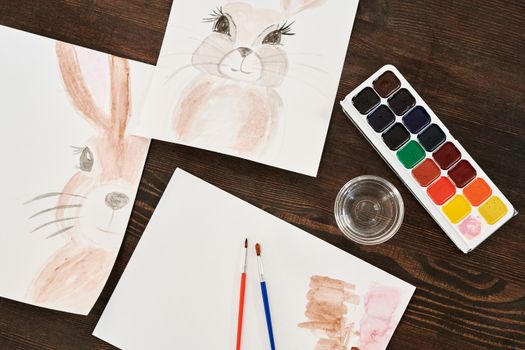 Photo: Andy Barbour / Pexels
Once you've dipped your toes into drawing, the world of color beckons. For beginners, two paint mediums stand out for their accessibility and versatility: acrylics and watercolors. Each offers a unique experience and set of challenges, but both are excellent starting points for learning about color mixing, brushwork, and composition. Let's break down the best art supplies for beginners in each category.
**Acrylic Paints for Beginners:**
Acrylics are incredibly popular for a reason: they are versatile, dry quickly, and clean up with water. They can be used thickly like oils or thinned down to resemble watercolors, making them very forgiving for new artists. For a beginner acrylic set, look for tubes labeled 'student grade.' These offer a good balance of pigment quality and affordability. A basic palette of colors usually includes titanium white, mars black, cadmium red hue, primary yellow, ultramarine blue, and perhaps a phthalocyanine green. These six colors allow you to mix a vast array of other hues.
Beyond the paints themselves, you'll need brushes. A starter pack of synthetic brushes in various shapes (round, flat, filbert) and sizes (small, medium, large) is ideal. Synthetic brushes work well with acrylics and are easy to clean. Don't invest in expensive natural hair brushes just yet. A palette for mixing colors is essential; a simple plastic tray, an old ceramic plate, or even wax paper will suffice. For surfaces, acrylics are incredibly versatile. Canvas boards or stretched canvases are popular, but you can also paint on paper specifically designed for acrylics (often labeled 'acrylic paper' or 'mixed media paper' with a heavier weight, 140 lb/300 gsm or more). Water for cleaning brushes and a paper towel or rag are also must-haves. A small spray bottle can be useful to keep your paints from drying out too quickly on the palette.
**Watercolor Paints for Beginners:**
Watercolors offer a luminous, delicate quality that is distinct from acrylics. They are known for their transparency and the way colors blend and flow on paper. For beginners, a pan set of watercolors (where the paint comes in solid, dry cakes) is often more convenient and less messy than tubes. A student-grade pan set from a reputable brand will provide a good selection of essential colors. Look for sets with at least 12-24 colors to give you a decent mixing range.
Just like with acrylics, brushes are crucial. For watercolors, softer brushes that hold a lot of water are preferred. Synthetic watercolor brushes or a blend of synthetic and natural hairs are excellent for beginners. A round brush (sizes 6, 8, 10) and a flat wash brush (1/2 inch or 1 inch) are great starting points.
The most important companion to watercolor paints is watercolor paper. This is non-negotiable. Standard drawing paper will buckle and pill when wet. Look for cold-press watercolor paper, which has a slight texture (tooth) and absorbs water well. A weight of at least 140 lb (300 gsm) is recommended to prevent warping. A block of watercolor paper, where the edges are glued down, is even better as it minimizes buckling.
Other essential watercolor supplies include two water containers (one for rinsing dirty brushes, one for clean water), a ceramic palette or a simple plastic mixing tray, and paper towels or a sponge for blotting excess water from your brush. Masking tape can be used to tape down loose sheets of watercolor paper to a board to prevent warping, if you're not using a block. Exploring color theory can significantly enhance your painting skills, regardless of the medium.
Learning basic color mixing will empower you to create any hue you desire. Both acrylics and watercolors provide fantastic avenues for beginners to explore the vibrant world of color. Choose the one that excites you most, gather your essential supplies, and dive in!
Beyond the Canvas: Beginner Mixed Media and Crafting Essentials
 Photo: https://kaboompics.com/ / Pexels
While drawing and painting are fundamental, the world of art extends far beyond, offering countless avenues for creative expression. For beginners looking to explore other artistic endeavors or combine different techniques, mixed media and crafting supplies open up an exciting realm of possibilities. These areas often encourage experimentation, collage, and the incorporation of various textures and materials, making them incredibly rewarding for those who enjoy a hands-on approach. The beauty of mixed media is its freedom – there are no strict rules, allowing you to blend drawing, painting, collage, and even sculptural elements. For a beginner interested in mixed media, a few key items can provide a fantastic starting point. A good quality mixed media paper or sketchbook (at least 90-140lb/180-300gsm) is crucial, as it needs to withstand wet and dry applications without buckling. A basic set of gel medium (matte or gloss) is essential for adhering collage elements and can also be used to alter paint consistency. A few different types of adhesive, such as a glue stick, PVA glue (white craft glue), and perhaps a stronger craft glue, will cover most bonding needs. Old magazines, newspapers, fabric scraps, and found objects can all become part of your mixed media creations, so start collecting! Crafting, on the other hand, often focuses on creating functional or decorative items. This can range from paper crafts like card making and origami to textile arts, jewelry making, and even basic sculpture. For a general crafting starter kit, consider a good pair of craft scissors, a craft knife with a cutting mat for precise cuts, various types of paper (construction paper, cardstock, patterned paper), and a selection of embellishments like buttons, beads, or glitter. Basic tools like rulers, pencils, and erasers remain universally useful. If you're interested in specific crafts, tailor your supplies accordingly. For example, if you want to try calligraphy or hand lettering, a set of brush pens and smooth paper would be ideal. If you're drawn to polymer clay, a basic clay starter kit with sculpting tools is a good investment. The key here is to not overcommit initially. Choose one or two crafting interests and buy just the essential tools. Many craft stores offer beginner kits that bundle necessary items, which can be a cost-effective way to get started. The internet is also a treasure trove of tutorials for various crafts, often listing the minimal supplies needed. Remember, the goal of exploring mixed media and crafting as a beginner is to have fun, experiment, and discover new ways to express yourself creatively. These areas are particularly forgiving and encourage a playful approach to art-making, making them perfect for building confidence and expanding your artistic repertoire. Don't be afraid to combine materials in unexpected ways; that's where true innovation often happens. The tactile experience of working with diverse materials can be incredibly stimulating and provides a wonderful complement to traditional drawing and painting practices. Embrace the mess, enjoy the process, and let your imagination lead the way. Finding inspiration is often the first step in any creative project, and exploring various art forms can provide that spark.
Discovering new art techniques can fuel your passion and guide your next supply purchase.
Smart Shopping & Common Pitfalls: Tips for Beginner Art Supply Buyers
Navigating the art supply store can be daunting, but with a strategic approach, you can make smart choices that support your artistic growth without unnecessary expenses or frustration. Here are some invaluable tips for beginner art supply buyers and common pitfalls to avoid:
* **Don't Buy the Cheapest Everything:** While it's tempting to save money, ultra-cheap supplies often lead to a poor experience. Cheap paints may have low pigment concentration, leading to dull colors and poor coverage. Inexpensive paper can buckle, bleed, or tear easily. Invest in student-grade quality; it’s a happy medium between professional expense and frustratingly poor performance.
* **Avoid Overwhelm with All-Inclusive Kits:** Many 'mega art kits' promise everything you need in one box. While they seem convenient, they often contain a large quantity of very low-quality items. You'll likely get a few usable items and a lot of filler. It's better to buy a few individual, higher-quality essentials for a specific medium than a huge kit of subpar tools.
* **Research Before You Buy:** A quick online search for 'best watercolor paper for beginners' or 'good acrylic brush set for students' can save you money and frustration. Read reviews, watch beginner art supply videos, and consult reputable art blogs. This small effort can lead to much better purchasing decisions.
* **Start Small, Expand Gradually:** You don't need every color or every brush shape on day one. Begin with a basic set of primary colors and a few versatile brushes. As you practice, you'll naturally discover what other colors or tools you need to achieve your desired effects. This method prevents wasted money on unused supplies.
* **Prioritize Paper Quality:** Regardless of the medium, the surface you work on is critical. Good paper can make even student-grade paints look better, while poor paper can make professional paints difficult to use. Always invest in decent quality paper suitable for your chosen medium.
* **Don't Forget the Basics (and Cleanup):** Beyond the glamorous paints and pencils, remember the practical necessities: a good eraser, a reliable sharpener, water containers, palettes, and cleaning rags/paper towels. Proper cleanup tools ensure your supplies last longer and your workspace stays tidy.
* **Utilize Sales and Coupons:** Art supply stores frequently have sales, especially around holidays or back-to-school seasons. Sign up for newsletters to get coupons and be notified of discounts. Buying during these times can significantly reduce your initial investment.
* **Resist the Urge for Every Gadget:** The art world has many specialized tools and gadgets. As a beginner, focus on mastering the basics with simple tools. You'll know when you genuinely need a specific tool once your skills develop and your artistic direction becomes clearer.
By keeping these tips in mind, you can confidently select the best art supplies for beginners, ensuring a positive and productive start to your artistic journey. Remember, the supplies are merely tools; your creativity and willingness to learn are your most important assets. Happy creating!
